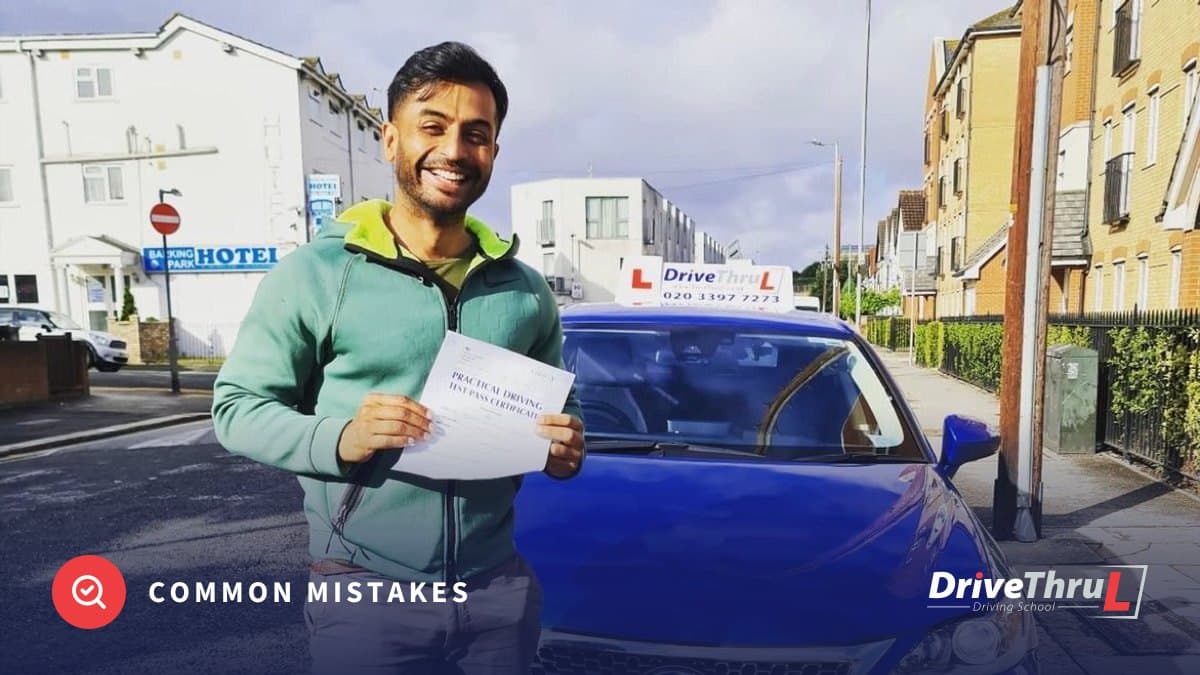
Every year, the DVSA publishes detailed data on the most common faults recorded during practical driving tests. Remarkably, the same mistakes appear at the top of the list year after year. This tells us something important: these faults are predictable, which means they're preventable. If you know exactly what examiners are looking for and practise deliberately, you can avoid the traps that catch thousands of learners.
Know the Enemy, Avoid the Fail
Master these 10 common faults and you'll eliminate the most common reasons learners fail their test.
📋 Understanding How Faults Work
Before diving into the specific mistakes, let's understand how the marking system works:
📈 The Three Types of Faults
Driving faults (minor)
Small errors that don't create danger. You can have up to 15 of these and still pass.
Serious faults
Errors that could potentially be dangerous. One serious fault = immediate failure.
Dangerous faults
Errors that actually put someone in danger. One dangerous fault = immediate failure.
A minor fault can become serious if it's repeated multiple times, or if it occurs in a situation where it creates genuine risk. For example, one missed mirror check might be minor, but consistently forgetting mirrors becomes serious because it shows a pattern of unsafe driving.
🔥 The 10 Most Common Test Faults
These are ten faults that commonly appear on DVSA test reports. For the official ranking, see our guide to driving test faults. Learn what goes wrong and how to avoid each one.
👁 Junctions: Observations
❌ What Goes Wrong:
- • Didn't look at all before emerging
- • Looked but didn't properly observe (eyes moved but didn't see)
- • Looked too early and the situation changed before moving
- • Failed to notice a hazard that was clearly visible
Junctions are everywhere. In a test with around 35 minutes of driving, you might meet 20 to 30 junctions. That's 20-30 opportunities to make this mistake.
✅ How to Avoid It:
- 1. Approach slowly, give yourself time to observe
- 2. Stop at the line if it's a give way or stop
- 3. Look RIGHT first (immediate danger on UK roads)
- 4. Look LEFT, then RIGHT again
- 5. If view is blocked, creep forward until you can see
- 6. Keep looking as you emerge
- 7. Keep looking as you emerge: Situations can change in seconds
Practice this routine until it's completely automatic. You shouldn't have to think about it. It should just happen at every junction.
Fault #2: Mirrors. Change of Direction

Your mirrors should be checked before any change in speed or direction. This fault is marked when you fail to check mirrors before:
- Signalling
- Turning left or right
- Changing lanes
- Overtaking
- Moving to the left or right around obstacles
Why It's So Common
Mirror checks need to happen constantly. Potentially dozens of times in a single test. It's easy to get distracted by other aspects of driving and forget. The problem is that each missed check is recorded, and multiple minors can add up to a serious fault.
How to Avoid It
"MSM: Mirror, Signal, Manoeuvre. Say it in your head before every action. If you're signalling, you should have just checked your mirror. If you're turning, you should have just checked your mirror. Make it a reflex."
DriveThruL Instructor
The key is to check the interior mirror first, then the relevant door mirror. Turning left? Interior mirror, then left door mirror. Turning right? Interior mirror, then right door mirror. Every single time.
Fault #3: Control. Steering
Steering faults include:
- Drifting: Not maintaining a straight line, wandering across the lane
- Cutting corners: Crossing into the opposite lane when turning
- Mounting the kerb: During normal driving or manoeuvres
- Late straightening: Not straightening the wheel quickly enough after a turn
- Jerky steering: Sudden, unsmooth inputs
Why It's So Common
Most steering errors come from looking at the wrong place. If you stare at the kerb, you'll hit the kerb. If you look at the car in front, you'll follow too closely. Your hands naturally steer where your eyes are looking.
How to Avoid It
- Look well ahead: Your primary focus should be 10-15 seconds ahead of you
- Look where you want to go: When turning, look into the road you're entering. Your hands will follow
- Keep a relaxed grip: Tension creates jerky movements
- Small adjustments: Gentle inputs rather than big corrections
- During manoeuvres: Use slow speed and full observation. Accuracy comes with reduced speed
Fault #4: Junctions. Turning Right
Turning right is more complex than turning left because you're crossing oncoming traffic. Common faults include:
- Cutting the corner and entering the wrong lane
- Not positioning correctly before the turn (too far left)
- Turning too early or too late
- Poor observation of oncoming traffic
- Hesitating when a safe gap is available
How to Avoid It
Right Turn Technique
- Position: Just left of the centre line, or in the right-turn lane if marked
- Timing: Wait until you can see it's safe. Don't rely on gaps in traffic
- The turn: Aim for the centre of the road you're entering
- Look: Keep checking for oncoming traffic right up until you turn
- Finish: End up on the left side of the new road
Fault #5: Move Off. Safely
Every time you move off from stationary. Whether at the start of the test, after a manoeuvre, at traffic lights, or after stopping behind another vehicle. You must do so safely. Faults include:
- Not checking the blind spot before pulling away
- Moving off when it's not safe (into the path of traffic)
- Stalling and rolling backwards
- Moving off too slowly and causing obstruction
How to Avoid It
Follow the same routine every single time you move off:
- Prepare: Clutch down, select first gear, set the gas, find the biting point
- Observe: Check interior mirror, right door mirror, then right blind spot
- Signal: If necessary (not always needed)
- Move: Release the handbrake and move off smoothly
If you stall, don't panic. Apply the handbrake, restart the engine, and go through the process again. A stall with good recovery is only a minor fault.
Fault #6: Response to Signs. Traffic Lights
This fault covers failing to respond correctly to traffic lights, including:
- Going through a red light (immediate fail)
- Going through amber when you could have stopped safely
- Stopping unnecessarily on green
- Not anticipating light changes
- Stopping over the stop line
How to Avoid It
- Scan ahead: Look for traffic lights early and assess whether they're likely to change
- Green doesn't mean go: Green means proceed if safe. Always check the junction is clear
- Amber means stop: Unless stopping would be dangerous (you're too close at too high a speed)
- Stop line: Stop before the line, not on it or over it
Fault #7: Positioning. Normal Driving
Positioning faults during normal driving include:
- Driving too close to the centre line
- Driving too close to parked cars
- Straddling lanes
- Incorrect lane choice on roundabouts
- Not positioning correctly for hazards
How to Avoid It
Normal driving position: About one metre from the kerb (roughly where your left hand wheels should be tracking).
Passing parked cars: Leave at least a door's width (about one metre). assume a door could open at any moment.
Narrow roads: If you can't leave enough space, slow down significantly. In really tight gaps, you might need to stop and let oncoming traffic through.
Fault #8: Mirrors. Change of Speed
Similar to Fault #2, but specifically when changing speed rather than direction. Your mirrors should be checked before:
- Slowing down
- Braking
- Accelerating significantly
- Stopping
Why It Matters
If you brake suddenly without knowing what's behind you, you risk being rear-ended. If you accelerate without checking, you might miss a vehicle about to overtake. The examiner wants to see that you're aware of what's happening behind as well as in front.
How to Avoid It
Get into the habit of a quick interior mirror check before any change in speed. It only takes a fraction of a second and should become automatic.
Fault #9: Move Off. Control
This is about the mechanical control of moving off, including:
- Stalling
- Rolling backwards on hills
- Excessive revving (over revving the engine)
- Harsh clutch control causing jerky movement
- Moving off in the wrong gear
How to Avoid It
Smooth Move-Off Technique
- Clutch down fully. Press it to the floor
- Select first gear. Make sure it's engaged properly
- Set the gas. Gentle pressure, aim for around 1500 RPM
- Find the biting point. Lift the clutch slowly until you feel the car want to move
- Hold the biting point. Keep your feet still for a moment
- Observations. Check mirrors and blind spot
- Release handbrake. The car should start to move
- Gradually release clutch. While adding slightly more gas
Hill starts require extra care. Use more gas, find a higher biting point, and only release the handbrake when you feel the car pulling against it.
Fault #10: Response to Signs. Road Markings
This covers all road markings, including:
- Lane markings (especially on roundabouts)
- Stop lines and give way lines
- Box junctions (yellow criss-cross markings)
- Bus lanes
- Chevrons and hatched markings
- Speed limit markings on the road surface
How to Avoid It
- Lane markings: Stay within your lane. If arrows are painted, follow them.
- Stop lines: Stop before the line, not on it.
- Box junctions: Don't enter unless your exit is clear (unless turning right and only blocked by oncoming traffic).
- Hatched markings: Don't cross solid boundary lines. Broken lines can be crossed if safe.
The Two Root Causes
If you analyse all ten common faults, they almost all come down to two fundamental issues:
Root Cause #1: Not Looking Enough
Faults 1, 2, 5, 8, and elements of 3, 4, 6, and 10 all involve insufficient observation. The solution is simple but requires constant practice: look more. Check mirrors constantly. Scan the road ahead. Check junctions thoroughly. Look where you're going.
Root Cause #2: Not Planning Ahead
Faults 6, 7, 10, and elements of others involve failing to anticipate what's coming. The solution: think ahead. What's that traffic light going to do? What lane do I need for this roundabout? Is that parked car likely to have someone in it?
If you can build habits of constant observation and forward planning, you'll avoid the vast majority of test faults before they happen.
How to Practice These Skills
- Focused practice: Instead of general driving, spend lessons working specifically on weak areas
- Mock tests: Simulate exam conditions to reveal which faults you're prone to
- Self commentary: Narrate what you're observing and doing. "Mirror, clear behind, signalling left, mirror, checking left..."
- Instructor feedback: Ask your instructor to mark you as an examiner would and review the faults
Ready to work on eliminating these common faults? Book a lesson with DriveThruL. our instructors know exactly which faults appear most often on East London test routes, and we'll help you avoid every single one.
Looking for driving lessons in East London? Book a lesson with DriveThruL and learn with DVSA registered instructors who know the local roads.
Related Topics
Ready to Start Driving?
Join thousands of learners who passed with DriveThruL. DVSA registered instructors across East London.
Continue Reading
How to Pass Your Driving Test First Time
Practical, examiner focused advice from instructors who have helped thousands of learners pass first time in East London.
DVSA Driving Test Booking Changes 2026: What Learners Need to Know
Major changes to how you book and manage your driving test took effect in spring 2026. Here is everything East London learners need to know about the DVSA rules now in force.
Driving Test Faults Explained: Minors, Serious & Dangerous
Everything you need to know about driving test faults. Understand the marking system, learn the most common mistakes, and discover how to avoid them on your practical test.