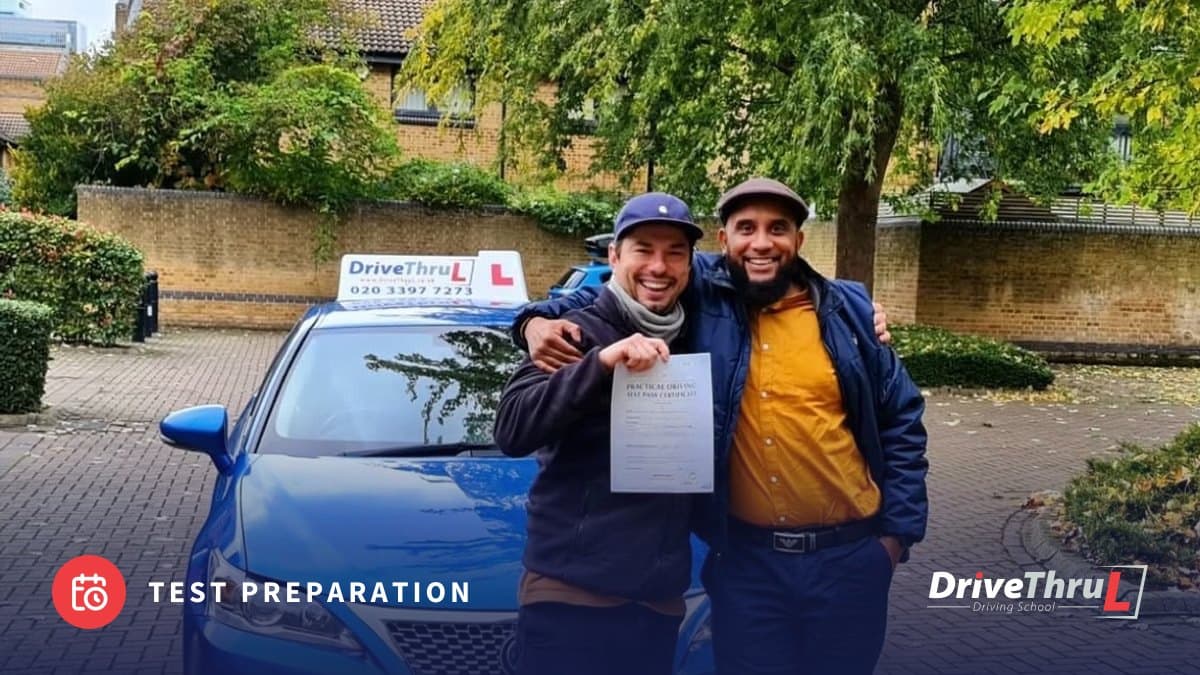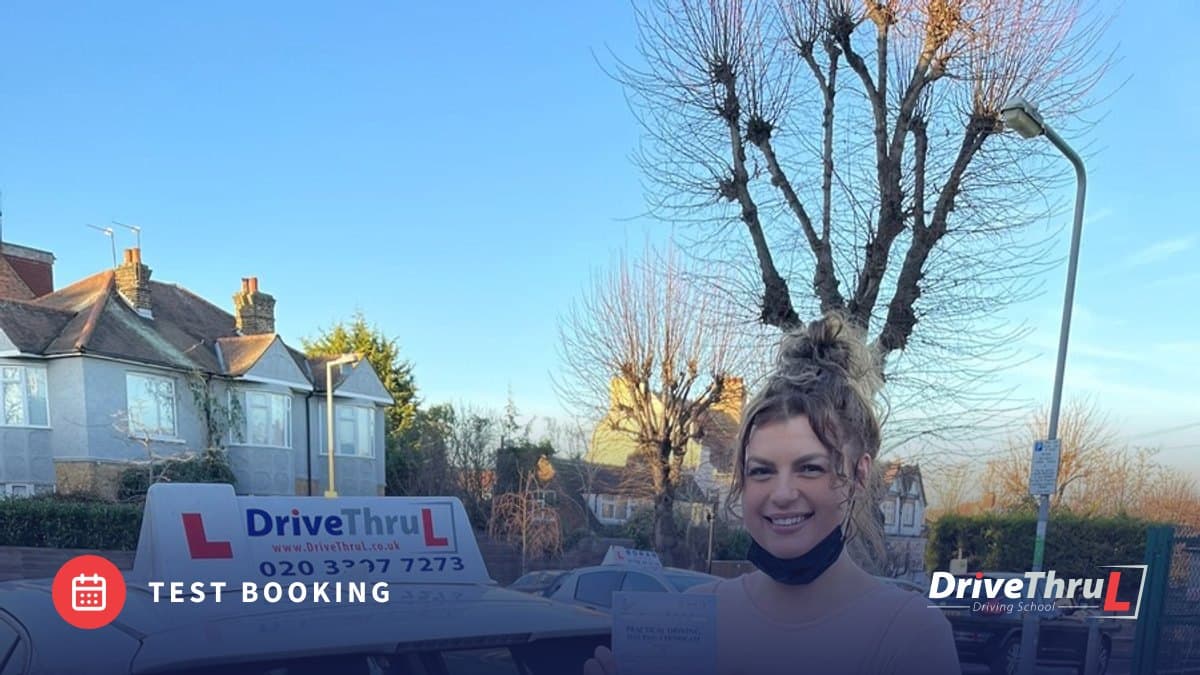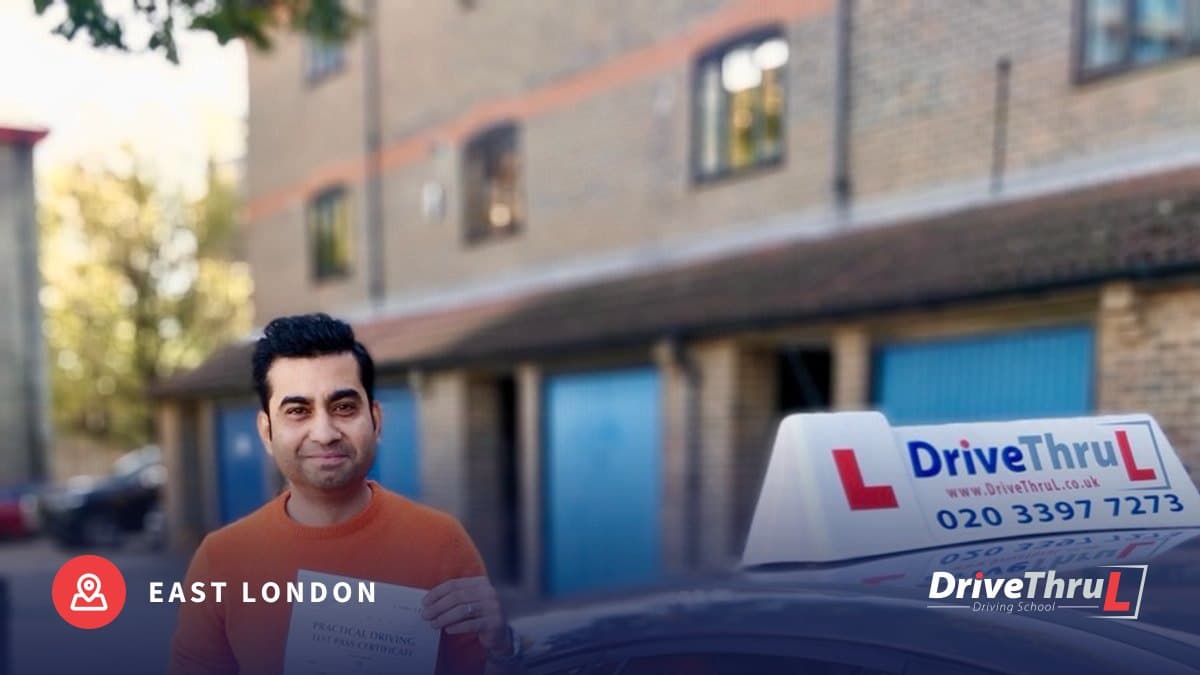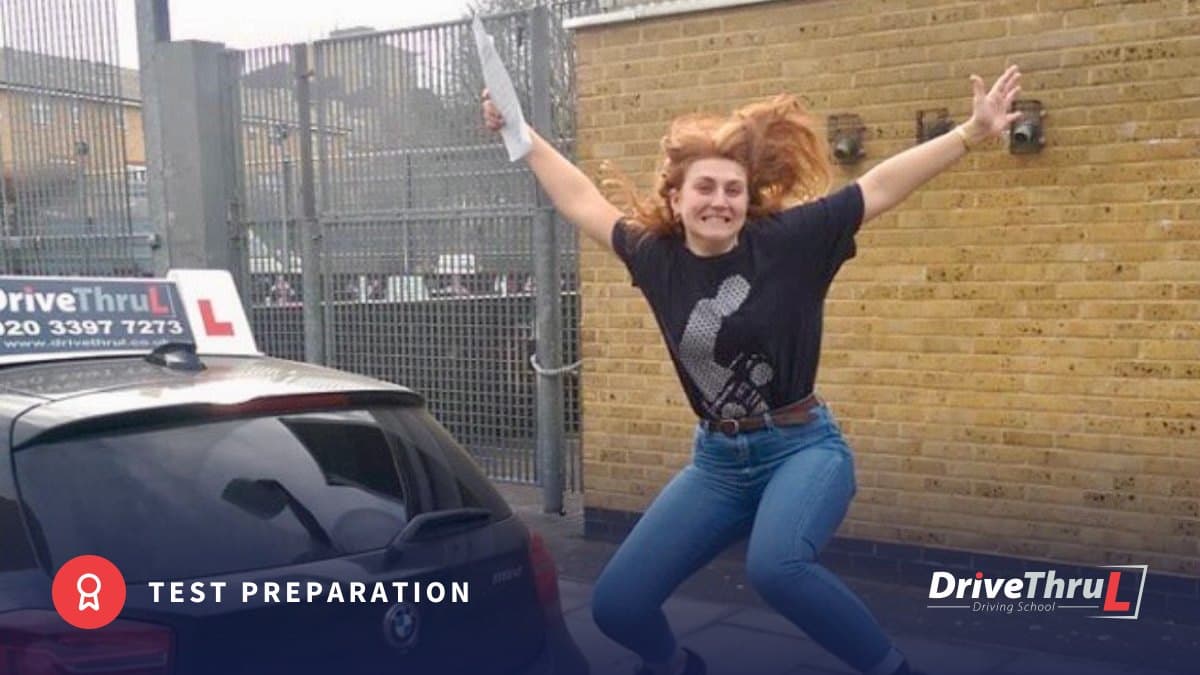
Passing your driving test first time is the goal every learner shares, and it's absolutely achievable with the right preparation. At DriveThruL, our DVSA approved instructors have helped thousands of learners across East London do exactly that.
Your Goal: First Time Pass
This guide gives you a clear, actionable roadmap to success from our experienced instructors.
📚 Understanding the UK Driving Test
Before diving into preparation strategies, let's understand exactly what you're preparing for. The UK practical driving test has evolved significantly and consists of several key components.
📋 What Does the Test Include?
On the modern driving test you drive for around 35 minutes, and it includes:
Eyesight Check
Read a number plate from 20 metres
Safety Questions
"Show me, tell me" questions
General Driving
Various road types and traffic
Independent Driving
20 to 35 minutes of independent driving
Reversing Manoeuvre
Parallel parking, bay parking, or pulling up on right
"The test isn't designed to catch you out. Examiners want to see that you can drive safely on your own. Once you understand this, the whole experience becomes less intimidating."
👤 DriveThruL Instructor Team
📊 The Numbers: Why First Time Success Matters
Let's look at the reality of UK driving test statistics:
📈 UK Driving Test Statistics
~50%
National pass rate (2025-26)
£62
Test cost (weekdays)
15+
Weeks wait in London
£150+
Cost of failing
These numbers tell an important story: roughly half of all candidates fail their first attempt. Proper preparation is what puts you in the half that passes. The difference isn't about natural talent, it's about knowing how to prepare.
✅ Step 1: Know When You're Truly Ready
The single biggest predictor of first time success is readiness. Booking your test too early is the number-one reason for failure.
🎯 Signs You're Ready for Your Test
You're genuinely ready when:
- ✔ Your instructor has confirmed you're at test standard (not just "almost there")
- ✔ You can drive for 40+ minutes with minimal instructor input
- ✔ You handle unexpected situations calmly and safely
- ✔ Your mock test results are consistently good
- ✔ You feel confident, not just hopeful
💡 Instructor's Tip
If your instructor says you need more time, listen. It's far cheaper to take a few extra lessons (£35-40 each) than to pay for a second test (£62) plus additional preparation lessons. Patience here saves money and stress.
🕑 How Many Lessons Do You Actually Need?
There is no minimum number of lessons. Studies cited by the Department for Transport in 2026 found learners spend 37 to 52 hours with an instructor and 13 to 20 hours practising with family or friends:
37-52
Hours with an instructor
13-20
Hours of private practice
However, these are ranges from studies, not targets. What matters most is the quality of your practice, not just the quantity. A learner who practises thoughtfully for 40 hours will outperform one who drives mindlessly for 60.
📍 Step 2: Master the Test Routes
Every test centre uses a set of routes that examiners rotate through. While you can't predict the exact route, you should familiarise yourself with the roads around your test centre.
🏙 East London Test Centres
Goodmayes
Routes include the A12, residential areas around Seven Kings, and various roundabouts
Loughton
Features Epping Forest roads, the High Road, and mixed urban/country driving
Hornchurch
Mix of suburban roads, A-roads, and quieter residential streets
Ask your instructor to take you through each common route at least once. Pay special attention to:
- ⚠ Tricky junctions and unmarked crossroads
- ⚠ Speed limit changes (especially 30 to 40mph transitions)
- ⚠ Complex roundabouts with multiple lanes
- ⚠ Areas with parked cars or narrow roads
❌ Step 3: Eliminate the Most Common Faults
The DVSA publishes data on why candidates fail. Year after year, the same faults dominate the list. Master these areas and you'll avoid the mistakes that catch most learners out.
📈 Top 10 Reasons for Failing (DVSA, April 2025 to March 2026)
- 1 Observation at junctions. Not looking properly before emerging
- 2 Mirrors when changing direction. Not checking mirrors before signalling, turning or changing lanes
- 3 Turning right at junctions. Poor position or timing when turning right
- 4 Response to traffic lights. Not reacting correctly to traffic lights
- 5 Steering control. Steering too early, too late, or not smoothly
- 6 Moving off safely. Not checking all around before moving off
- 7 Response to road markings. Missing lane arrows, lines or box markings
- 8 Response to traffic signs. Missing or ignoring signs
- 9 Positioning in normal driving. Poor lane or road position
- 10 Maintaining progress. Driving too slowly or hesitating when it is safe to go
🎯 The MSM Routine
Most observation faults can be eliminated by drilling the Mirror-Signal-Manoeuvre routine until it's automatic. Every single time you change speed, direction, or position: Mirrors first, then signal (if needed), then manoeuvre.
🎓 The Power of Mock Tests
Mock tests are essential, not optional. They replicate exam conditions exactly:
- 🔇 Your instructor stays silent (no prompts or hints)
- 🗺 You follow sat nav directions or verbal instructions
- 📋 The full DVSA marking sheet is used
- 🔥 You experience the pressure of being assessed
Most learners find their first mock test far more stressful than expected. That's exactly the point. By your second or third mock, the nerves settle and the process feels familiar.
🎯 Target: Complete at least 2 mock tests before your real exam
📅 Step 4: Prepare for Test Day
Proper preparation in the 24 hours before your test can make a significant difference to your performance.
🌙 The Night Before
Gather Documents
Provisional licence + theory pass certificate
Prepare Glasses
Clean and ready if you need them
Get 7-8 Hours Sleep
Tiredness affects reactions
No Alcohol
Even small amounts affect driving
🌞 Test Day Morning
Eat a proper breakfast: Low blood sugar causes poor concentration
Arrive 10-15 minutes early: Rushing creates stress
Have a warm up drive: 20-30 minutes to settle nerves
Use the toilet: No distractions during the test
🧠 Managing Test Day Nerves
Some nervousness is normal, even helpful. A small amount of adrenaline sharpens your focus. But overwhelming anxiety needs to be managed:
💜 Calming Techniques That Actually Work
💡 Remember: You're allowed up to 15 minor faults and still pass. Examiners want safe driving, not perfection.
🚗 Step 5: During the Test
You drive for around 35 minutes. Here's how to approach it.
👁 The Eyesight Check
Before you get in the car, you'll be asked to read a number plate from 20 metres away. If you wear glasses or contacts for driving, make sure you're wearing them. If you fail this check, the test ends immediately.
💬 The "Show Me, Tell Me" Questions
You'll be asked two vehicle safety questions. Getting both wrong only counts as one minor fault, so don't panic if you're unsure. Common questions include:
- • How would you check the brake lights are working?
- • How would you check the tyre tread and condition?
- • Show me how you'd wash and clean the windscreen
- • Show me how you'd demist the front windscreen
🛠 General Driving
Listen carefully to the examiner's instructions. If you don't understand something, ask them to repeat it: this is completely acceptable and won't count against you.
✔ Be Decisive
If it's safe to go, go. Hesitation is a common fault.
✔ Be Smooth
No harsh braking, jerky steering, or aggressive acceleration.
✔ Be Aware
Check mirrors frequently. Anticipate other road users.
✔ Stay Calm
Wrong turns are NOT a fault if you drive safely.
🗺 The Independent Driving Section
For 20 to 35 minutes, you'll follow directions from a sat nav, traffic signs, or both. This tests your ability to drive independently while following directions.
"The sat nav section is testing your driving, not your navigation. If you miss a turn, the sat nav recalculates. Stay calm, keep driving safely, and follow the new directions. Missing a turn is completely fine."
🔄 The Reversing Manoeuvre
You'll be asked to complete one of these manoeuvres:
Parallel Parking
Park behind another vehicle at the roadside
Bay Parking
Drive in and reverse out (or vice versa)
Pull Up on Right
Stop, reverse 2 car lengths, rejoin traffic
💡 Key: The secret to all manoeuvres is observation. Check all around before starting and keep checking throughout. Slow and safe beats quick and careless.
🎉 After the Test: What Happens Next
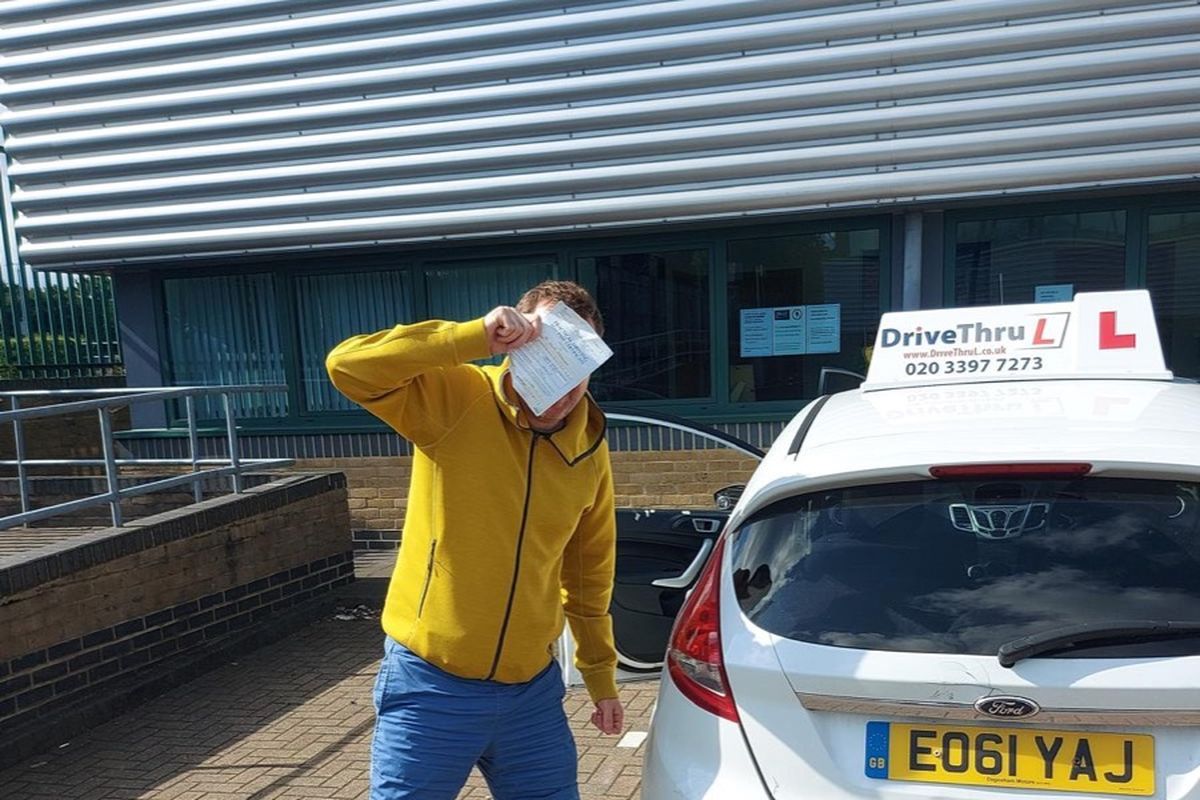
🏆 If You Pass
Congratulations! The examiner will give you a pass certificate and explain how to apply for your full licence.
- ✓ Drive independently immediately
- ✓ Pass certificate valid for 2 years
- ✓ Full licence arrives within 3 weeks
💪 If You Don't Pass
Don't be discouraged. About half of candidates don't pass first time. You'll get a detailed debrief of all faults.
- ✓ Review the feedback carefully
- ✓ Rebook straight away for a date at least 10 working days away
- ✓ Focus on your weak areas
At DriveThruL, we review every test result with our learners. We analyse what went wrong, address any weak areas, and build a targeted plan for the next attempt. Many of our learners who don't pass first time go on to pass on their second try with flying colours.
📅 Rebooking Timeline
You must wait at least 10 working days before taking another test. Use this time productively: focus specifically on the areas that caused you to fail, and book more mock tests to rebuild confidence.
🌟 Final Thoughts
Passing your driving test first time isn't about luck, it's about preparation. The learners who pass are the ones who:
At DriveThruL, we've helped thousands of learners across East London pass their driving test. Our DVSA approved instructors know the local test routes, understand what examiners are looking for, and have refined our teaching methods over years of experience.
🚀 Ready to Pass First Time?
Join thousands of successful learners across East London
Book Your First Lesson