Becoming a driving instructor in the UK means getting your name onto the DVSA's Approved Driving Instructor register. Until you are on it, or hold a valid trainee licence, taking money for a driving lesson is against the law, not a technicality. The route there is three tests, roughly six to twelve months, and somewhere between two and four thousand pounds all in. This guide walks the whole thing honestly, including the part most training adverts skate over: how the examiner actually scores the lesson you teach in Part 3.
Read this before you pay anyone a deposit
The three tests do not have equal difficulty. Part 1 and Part 2 are exams about you. Part 3 is an exam about somebody else's learning, and it is where most candidates stop. Choose your trainer on how they prepare you for Part 3, not on how cheap the package is or how good the brochure looks.
✅ Can you even start? The eligibility gate
Before any training or any test fee, check that you clear all five of these. People do pay for courses and then discover they are not eligible.
You are 21 or over
You can usually apply to start the qualifying process up to 6 months before your 21st birthday, but you cannot qualify as an ADI until you are 21.
You have held a full car driving licence for at least 3 years
A full category B licence. If you are applying in Northern Ireland the rule is different, so check with DVA rather than assuming the GB requirement applies.
Any driving ban ended at least 4 years ago
If you have been banned from driving, you can only apply 4 years after the ban has ended, and you must tell DVSA about it when you apply. Points alone do not automatically stop you, but your overall record is looked at.
You get a new criminal record check
You will teach teenagers alone in a car, so a DBS check starts the application. You need a new one even if you already hold a current DBS from another job. Declare everything: a disclosed old conviction is assessed on its merits, an undisclosed one is treated as dishonesty.
You are judged a "fit and proper person"
A deliberately broad test that lets DVSA refuse or remove someone on conduct grounds. In practice it rarely bites, but it is the reason honesty on the application matters more than a tidy record.
One thing to check before you begin: what you can teach in depends on your own driving licence, not the car you test in. If you hold a manual licence, you can take your tests in a manual or an automatic car and still teach in both once you qualify. If you hold an automatic-only licence, you must take the tests in an automatic and can only teach in automatic cars. Automatic demand is growing quickly, particularly in London. Our guide to manual versus automatic is written for learners, but the market logic in it applies to your decision too.
🔢 The three qualifying tests at a glance
| Test | What it is | Attempts | How you pass |
|---|---|---|---|
| Part 1 | Theory and hazard perception | Unlimited | 85 out of 100, and at least 20 in each of the four bands. Then 57 out of 75 on hazard perception. |
| Part 2 | Your own driving ability | 3 | No more than 6 driving faults, and no serious or dangerous fault at all. |
| Part 3 | Your ability to teach | 3 | 31 out of 51 across 17 competencies, and more than 7 out of 15 on risk management. |
Part 1 has no attempt limit, but passing it starts a clock that does. More on that below, because it is the rule that quietly ends more attempts than any test.
📚 Part 1: theory and hazard perception
This is the learner theory test grown up. 100 multiple-choice questions in 90 minutes, drawn from four bands of 25:
- Road procedure
- Traffic signs and signals, car control, pedestrians and mechanical knowledge
- Driving test, disabilities and the law
- Publications and instructional techniques
You need 85 out of 100 overall and at least 20 out of 25 in every band. That second condition is what catches people. A strong driver can score 90 overall and still fail on the fourth band, because band four is not about driving at all: it is about the DVSA publications, the National Standard, and how instruction is supposed to work. Read The Official DVSA Guide to Learning to Drive, Driving: the essential skills, and the National Standard for driver and rider training properly rather than skimming.
The hazard perception half is 14 clips containing 15 scoreable hazards, pass mark 57 out of 75. That is a much higher bar than the 44 out of 75 a learner needs, and the clips are the same. If you have been driving for years, your instinct is to react late because you are relaxed and reading the road well ahead. Practise deliberately.
🚗 Part 2: your own driving
About an hour of driving to a standard well above the learner test. It opens with an eyesight check, then five vehicle safety questions, then general driving, manoeuvres from the standard set, and an independent driving section.
You are allowed no more than 6 driving faults, and not a single serious or dangerous one. For comparison, a learner is allowed 15. The examiner is looking for genuinely expert driving: planned, smooth, correctly positioned, decisive at junctions, and demonstrably safe rather than merely lucky.
The most common reason experienced drivers fail Part 2
Habits. Twenty years of crossing your hands, rolling a stop line, or coasting to a junction have become invisible to you. Almost everyone needs a block of lessons purely to un-learn things they did not know they were doing. Do not book Part 2 on the assumption that being a good driver is enough.
🎓 Part 3: the one that decides it
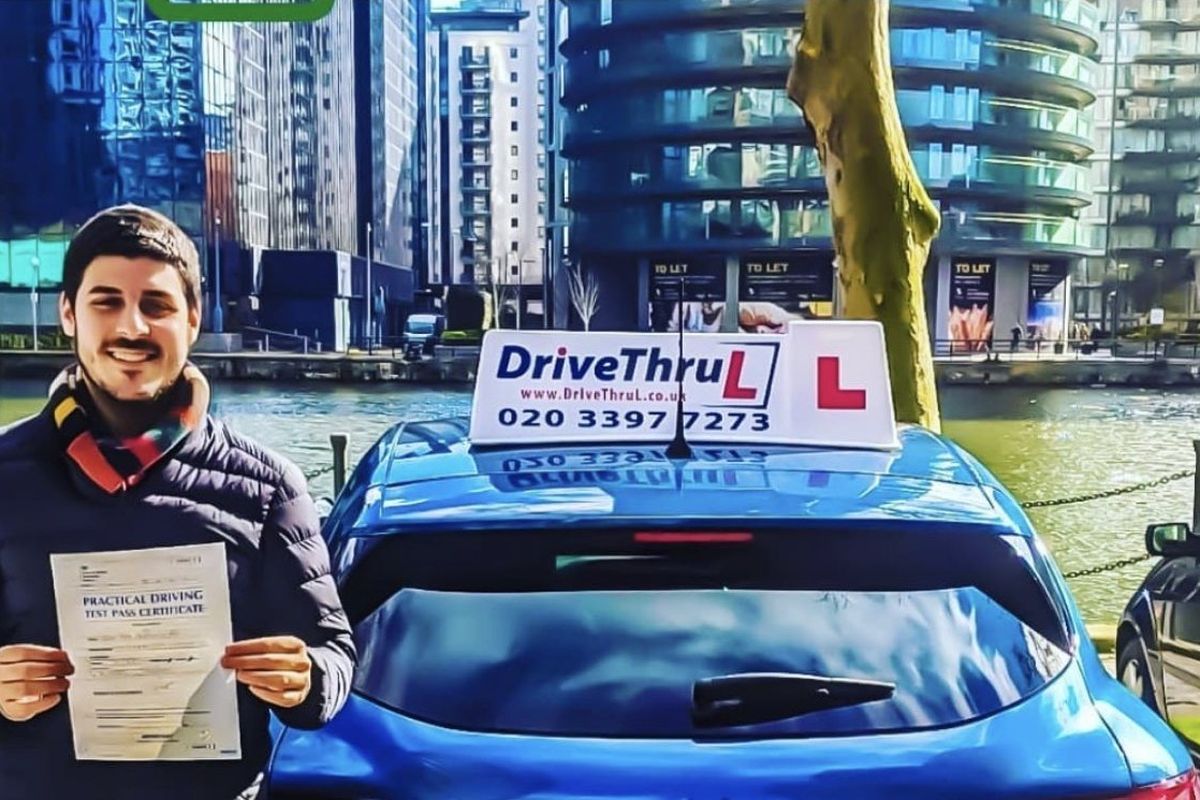
Part 3 is a real 45-minute driving lesson with a real pupil, with the examiner sitting in the back observing. Not role-play, not a script. The pupil can be a partly trained learner, a fully trained learner or a full licence holder, and you choose who you bring. A partly trained learner must be able to drive for about 40 minutes without frequent stops, and the pupil cannot be an ADI or someone preparing for their own Part 3. Then the examiner scores you 0, 1, 2 or 3 on each of 17 competencies, grouped into three sections. Maximum 51.
Lesson planning
- Did the trainer identify the pupil's learning goals and needs?
- Was the agreed lesson structure appropriate for the pupil's experience and ability?
- Were the practice areas suitable?
- Was the lesson plan adapted, when appropriate, to help the pupil work towards their learning goals?
Risk management
- Did the trainer ensure that the pupil fully understood how the responsibility for risk would be shared?
- Were directions and instructions given to the pupil clear and given in good time?
- Was the trainer aware of the surroundings and the pupil's actions?
- Was any verbal or physical intervention by the trainer timely and appropriate?
- Was sufficient feedback given to help the pupil understand any safety critical incidents?
Teaching and learning strategies
- Was the teaching style suited to the pupil's learning style and current ability?
- Was the pupil encouraged to analyse problems and take responsibility for their learning?
- Were opportunities and examples used to clarify learning outcomes?
- Was the technical information given comprehensive, appropriate and accurate?
- Was the pupil given appropriate and timely feedback during the session?
- Were the pupil's queries followed up and answered?
- Did the trainer maintain an appropriate non-discriminatory manner throughout the session?
- At the end of the session, was the pupil encouraged to reflect on their own performance?
How the score becomes a result
| Total out of 51 | Result | What it means |
|---|---|---|
| 43 to 51 | Grade A | A high standard of instruction. If you later want to join the voluntary ORDIT register of instructor trainers, you need a Grade A at a standards check; a Part 3 Grade A does not count. |
| 31 to 42 | Grade B | A sufficient level of competence. You qualify and join the register. |
| 30 or below | Fail | One of your three attempts is gone. |
Two ways to fail no matter what your total says
You fail automatically if you score 7 or less out of 15 on the five risk management items, or if the examiner has to stop the lesson on safety grounds. Either one ends it regardless of how high your overall mark is. Safety is not one section among three, it is a veto over the other two.
The arithmetic worth understanding
Score a flat 2 on every one of the 17 items and you land on 34: a comfortable Grade B and a pass. So the pass standard is not "be brilliant", it is "be consistently competent everywhere and never absent anywhere". A 0 or a 1 costs you far more than a 3 gains you, because the 3s are hard and the 0s are usually avoidable.
The items that most often come back marked low are 1, 4 and 11. Item 1 goes wrong when the instructor arrives with a lesson already decided and asks no real questions. Item 4 goes wrong when the pupil visibly cannot do what was planned and the instructor pushes on with the plan anyway. Item 11 goes wrong when the instructor answers their own questions, filling every silence instead of letting the pupil work it out.
Item 4 is worth dwelling on, because it is the one candidates most often misunderstand as a broken promise. Changing the plan when the pupil is not ready is correct teaching, not a failure to deliver. The mark is for adapting the lesson to help the pupil towards their goal, and the examiner is specifically watching for whether you noticed and responded. Teaching only what the pupil can actually learn today is the competence being tested.
⏳ The two-year clock, and the three attempts
This is the structural rule that ends most attempts, and it is not on the brochures.
From the day you pass Part 1 you have:
- Two years to get through the rest. GOV.UK's step-by-step puts it as passing the other parts within 2 years; the ADI register guide phrases the Part 3 deadline as having booked the test within 2 years. Do not plan around the gap between those two wordings.
- Three attempts at Part 2.
- Three attempts at Part 3.
Fail Part 2 or Part 3 three times, or run out of the two years, and the whole thing resets: you start again from Part 1. You cannot retake Part 1 until 2 years after you first passed it, and after a third Part 3 fail you must stop paid lessons straight away because your trainee licence is no longer valid.
Two practical consequences. First, do not pass Part 1 early "to get it out of the way" before you have the time and money lined up for the rest, because that starts the clock for nothing. Second, do not burn a Part 3 attempt to "see what it is like". Attempts are a finite resource and a wasted one is genuinely expensive.
🏷️ The trainee licence, and the choice you cannot undo
Once you have passed Part 1 and Part 2, you can apply for a trainee licence, usually called the pink licence. It lets you charge for lessons for six months while you prepare for Part 3, which is how most people fund the rest of their training and get the hours in front of real pupils that Part 3 actually requires.
To get one you must declare at least 40 hours of training with a qualified trainer in the last 6 months, covering the full training programme, of which at least 25% must be practical in-car training. Then you and your sponsor must commit to one of two options:
Option A · Supervision
Your sponsoring ADI supervises 20% of all the lessons you give while you hold the licence. More hands-on, more feedback, and it eats into your teaching time.
Option B · Extra training
You do at least 20 hours of extra training while you hold the licence, finished within 3 months of getting it and before you book your Part 3 test. Fewer eyes on your lessons, and a hard deadline attached.
You choose once
DVSA's wording leaves no room: "You can only choose one option and you cannot change to the other after you've made your decision." You cannot start on Option B, find you are struggling alone, and switch to supervision partway through. Decide it deliberately with your trainer, and if you are at all unsure how ready you are, the supervised route is the one that puts a second pair of eyes on the lessons Part 3 will be marked on.
A trainee licence is a genuine legal permission to teach for money, which also means it carries genuine responsibility. You will need proper insurance from day one; our driving instructor insurance guide covers what cover you actually need and what the common gaps are.
💰 What it costs and how long it takes
The DVSA fees are the small part. The training is the real cost, and it varies enormously.
| What you pay for | Typical cost | Notes |
|---|---|---|
| DBS check | £5.40 | First step of the application, through the GOV.UK driving instructor service. You need a new one even if you already hold a DBS certificate. |
| Three DVSA test fees | £81 + £111 + £111 = £303 | Part 1, Part 2, Part 3. You pay the full amount again for every retake. |
| Training course | £1,500 to £3,500 | The variable that matters. Cheap packages usually mean fewer in-car hours. |
| Trainee licence (optional) | £140 | Usually pays for itself, since you can earn during the six months. |
| Registration on qualifying | £300 | Your first ADI badge. Covers four years, then re-registration is £300 again. |
| A car you can teach in | Varies widely | Dual controls fitted, plus instructor insurance. |
Check before you budget. The DVSA fees above were correct at the time of writing, but they are reviewed periodically. The live list is published on GOV.UK's ADI fees page, and the whole route is set out step by step at gov.uk/become-car-driving-instructor. Those two pages are the only sources worth trusting on price and process.
Timeline: six to twelve months is normal for someone training around an existing job. Faster than six months usually means Part 3 was rushed. Much longer than twelve and the two-year clock starts to matter.
🔍 Choosing a trainer without getting burned
Instructor training is an unregulated market wrapped around a regulated qualification, and the quality range is wide. Five questions that separate the good from the glossy:
- Are you on ORDIT? The Official Register of Driving Instructor Trainers is DVSA's voluntary register of vetted trainers. It is not compulsory, and some excellent trainers are not on it, but it is a real check that somebody has assessed them. Ask, and ask why not if the answer is no.
- What grade did you get, and when? Anyone training you for Part 3 should be able to say what they scored and how recently. A Grade A trainer has demonstrated the standard you are aiming at.
- How many in-car hours does the package actually include? Not "hours of training" as a blended number. In-car, with you teaching and them observing. This is the number that predicts a Part 3 pass and the number cheap packages quietly shrink.
- What happens if I fail Part 3 first time? A straight answer about further training and cost, given before you pay, tells you a lot.
- Am I signing anything that ties me to a franchise afterwards? Some training is priced low because it is a recruitment funnel with a contract at the end. That can be a fair deal, but you should know it is the deal.
If you want to see the shape of a training route before you commit to anyone, our ADI training process page sets out how we structure it, and the requirements checklist is a quick way to confirm you are eligible before you spend anything.
💵 What you will actually earn
An instructor's income is hourly rate multiplied by lessons taught, minus the cost of the car and whatever a franchise takes. In London the rate is higher than the national picture and so is the cost of everything else. A working full-time ADI is generally in the £25,000 to £40,000 range, with the upper end belonging to people who fill their diary and keep it full.
The variable nobody mentions in recruitment adverts is not the hourly rate, it is diary density. Two instructors charging the same rate can earn very differently because one has pupils clustered in a small area back to back and the other spends forty minutes driving between them. Where you teach and how tightly you can pack a day matters as much as what you charge.
Our instructor earnings page breaks the numbers down properly, and the London lesson price guide shows what learners in this market are currently paying, which is the other half of the same equation.
📌 After you qualify: it does not stop at the badge
After passing Part 3 you must apply for your first ADI certificate, the green badge, which costs £300, within 12 months, or you have to pass all three tests again. Once you have it you can charge for lessons, and it must be displayed in your windscreen. Two things then follow you for the rest of your career:
- Registration lasts four years. To renew you pay £300 again and need a new DBS check, so apply for the check about 3 months before your renewal is due. Let it lapse and you cannot legally charge for lessons until it is restored.
- The standards check, which DVSA carries out periodically. It is marked on the same 17 competencies and the same 51 points as Part 3, including the same risk management veto. Score below 31 and you fail it; repeated failure removes you from the register.
That last point is the single most useful thing to understand early. Part 3 is not a hurdle you clear and forget. It is the permanent measurement of your teaching, and every hour you spend genuinely understanding the 17 items now is an hour you do not spend panicking about a standards check in four years. Our standards check guide goes through it item by item.
❓ Common questions
Can I teach my own family for free while I am training?
Supervising a learner privately is a different thing from instructing for payment, and the rules on supervising a provisional licence holder are about your age and licence length, not your ADI status. What you cannot do is take payment or reward of any kind before you are on the register or hold a trainee licence.
Do I need my own car?
Not necessarily to qualify, since trainers usually provide a car for Part 2 and Part 3. You do need one to work. It needs dual controls, appropriate insurance, and to be a car you are happy to spend forty hours a week in.
Is a trainee instructor the same as being an instructor?
No. On a trainee licence you can teach for payment for six months, but you are not an ADI. You must display the licence on the nearside edge of the windscreen, describe yourself as a trainee driving instructor (DVSA says not to use the term PDI), and only teach through the driving school named on your licence. Plenty of good instructors teach their first pupils as a trainee. It is a stage, not a lesser job, but do not let anyone describe it as being qualified.
How hard is Part 3 really?
It is comfortably the hardest of the three and historically has the lowest pass rate of the set, well under half. The reason is that Part 1 and Part 2 test things you can revise and practise alone, while Part 3 tests your ability to change somebody else's behaviour in 45 minutes while managing risk in live traffic. That is a genuinely different skill, and no amount of driving experience substitutes for practising it.
Can I qualify in an automatic and convert to manual later?
It depends on your own driving licence, not the car you test in. With a manual licence you can teach in both, whatever car you take your tests in. With an automatic-only licence you must pass the ordinary car driving test in a manual car first if you want to teach in manuals.
Can I do this part time?
Yes, and most people train around a job. The qualifying process is flexible; the constraint is the two-year clock. What is harder part time is the working life afterwards, because learner demand concentrates in evenings, weekends and school holidays.
🎯 If you are in East London
We are a driving school in East London and we train and take on instructors, so treat what follows as us being upfront rather than neutral. Two things worth knowing about this market specifically. Demand for automatic lessons is growing faster than the supply of instructors who can teach them. And demand for female instructors in this part of London consistently outstrips supply, to the point where learners wait rather than switch.
If the route above sounds like something you want to start, the eligibility checklist takes two minutes and will tell you whether you can begin. If you are already a qualified ADI looking for pupils rather than training, you can see how joining us works: there are no franchise fees, and we pass you students in your area. If you hold a trainee licence, you can only teach through the school named on it, so moving to us means applying to DVSA for a new trainee licence (there is no fee).
And whichever route you take, get the 17 competencies in front of you early. Everything from Part 3 to the standards check you sit in your fourth year is scored on that one sheet of paper.