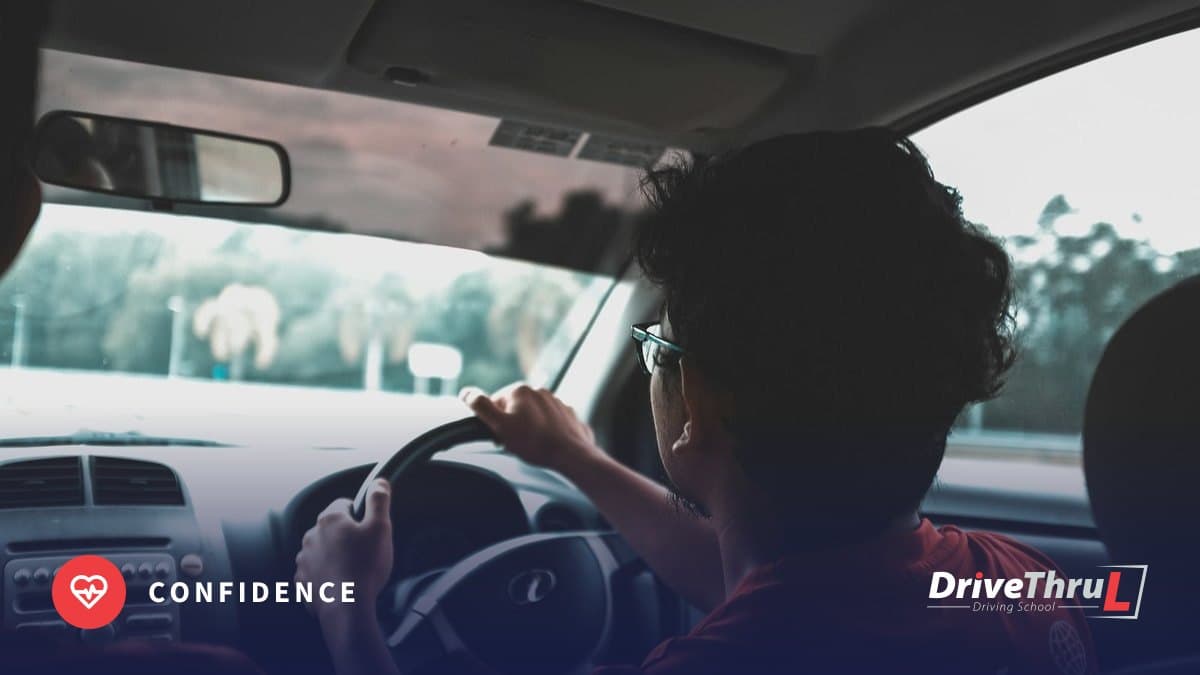
If the thought of sitting behind the wheel makes your stomach churn, your palms sweat, or your heart race, you're not alone. Driving anxiety is one of the most common concerns we hear from new learners at DriveThruL. Some people feel mildly nervous; others experience genuine fear or even panic. Both are completely normal, and both can be overcome with the right approach.
Understanding Driving Anxiety
Driving anxiety exists on a spectrum. For some learners, it's a background nervousness that fades once they get going. For others, it's an overwhelming fear that makes even thinking about lessons difficult. Understanding where you fall on this spectrum. And why you feel the way you do. Is the first step toward managing it.
Common Causes of Driving Anxiety
Fear of accidents
Worry about causing a crash, hurting yourself, or hurting others.
Fear of losing control
The car feels like a powerful machine you can't fully manage.
Previous bad experiences
As a passenger in an accident or near miss, or a previous bad lesson.
General anxiety
Anxiety that extends to driving as one of many triggers.
Performance pressure
Worry about being judged by the instructor, other drivers, or yourself.
Specific fears
Motorways, roundabouts, dual carriageways, busy traffic, or night driving.
Claustrophobia
Feeling trapped inside the vehicle.
How Common Is Driving Anxiety?
- Learner anxiety is common: every experienced instructor works with anxious learners week in, week out
- It does not end at the test: plenty of qualified drivers avoid situations like motorways or night driving because of anxiety
- Women are statistically more likely to report driving anxiety (though men experience it too)
- Most anxious learners go on to pass their test and become confident drivers
The key message: you are in very good company. There is absolutely no shame in feeling anxious about learning to drive. It's actually a sensible response. Cars are powerful, roads can be busy, and you're learning a complex skill. The goal isn't to eliminate anxiety entirely (some alertness is helpful), but to manage it so it doesn't hold you back.
The Critical Factor: Choosing the Right Instructor
Nothing affects an anxious learner's experience more than their instructor. The wrong instructor can make anxiety worse. The right instructor can transform your entire relationship with driving.
What to Look for in an Instructor
Signs of a Good Instructor for Anxious Learners
- Patience: They never raise their voice, show frustration, or make you feel stupid
- Calmness: Their presence is reassuring, not stressful
- Adaptability: They adjust the lesson plan to your comfort level, not theirs
- Specific experience: They've successfully taught many anxious learners, not just drivers in general
- Positive focus: They emphasise what you did well, not just what needs work
- Gradual progression: They believe in building confidence step by step
- Understanding of anxiety: They recognise it as a genuine challenge, not something to dismiss
Red Flags to Watch For
- Raising their voice or showing visible frustration
- Pushing you into situations you're not ready for
- Dismissing your concerns ("just get on with it")
- Comparing you unfavourably to other learners
- Making you feel guilty for being nervous
If your current instructor displays any of these behaviours, consider switching. A bad instructor match can set you back significantly, while the right one can unlock progress you didn't think possible.
"I changed instructors three times before I found someone who understood my anxiety. The difference was night and day. What felt impossible with the wrong instructor felt manageable with the right one."
A learner experience our instructors hear often
Practical Techniques for Managing Anxiety
These aren't just vague suggestions. They're proven techniques that work for most anxious learners. Try them all and stick with what helps you.
1. Box Breathing (4-4-4-4)
When anxiety spikes, your breathing becomes shallow and fast. This triggers more anxiety (your body thinks there's a threat). Breaking this cycle with controlled breathing is one of the most effective instant techniques.
How to Box Breathe
- Breathe in slowly through your nose for 4 counts
- Hold your breath for 4 counts
- Breathe out slowly through your mouth for 4 counts
- Hold empty for 4 counts
- Repeat 3-4 times (or until you feel calmer)
Use box breathing before your lesson, or when the car is parked. While you are driving, do not hold your breath: breathe in gently for 5 and out for 5 instead.
2. Progressive Muscle Relaxation
Anxiety often manifests as physical tension. Tight shoulders, clenched jaw, gripping the steering wheel too hard. Progressive muscle relaxation helps you notice and release this tension.
Before your lesson:
- Tense your shoulders up toward your ears for 5 seconds, then release
- Clench your fists for 5 seconds, then release
- Scrunch your face for 5 seconds, then release
- Notice how much more relaxed your muscles feel after releasing
3. Cognitive Reframing
Anxious thoughts tend to follow predictable patterns. Learning to recognise and challenge these thoughts can significantly reduce their power.
Common Anxious Thoughts and How to Reframe Them
"I'm going to crash."
→ "My instructor has dual controls and will keep us safe. I'm learning in a controlled environment."
"Everyone is watching me and judging me."
→ "Other drivers are focused on their own driving. They barely notice L-plates, and they certainly aren't judging."
"I stalled, so I'm terrible at this."
→ "Every driver has stalled, including my instructor. Stalling is normal and doesn't mean I'm bad at driving."
"I'll never be able to do this."
→ "Millions of people learn to drive every year, including people who were more anxious than me. I can learn too."
4. Gradual Exposure
The temptation to "just push through" anxiety often backfires. Instead, gradual exposure. Starting with easy situations and slowly building up. Is much more effective.
A typical progression might be:
- Sitting in the car: Just getting comfortable with the controls (not even driving)
- Empty car park: Starting, stopping, steering with no traffic
- Quiet residential streets: Minimal traffic, low speeds
- Busier residential areas: More traffic, junctions, parked cars
- Main roads: Higher speeds, more complex situations
- Dual carriageways: Faster traffic, lane changes
- Complex situations: Busy roundabouts, town centres, multi lane roads
A good instructor will match this progression to your comfort level, only moving forward when you're ready.
5. Visualisation
Before your lesson, spend a few minutes visualising yourself driving calmly and successfully. Picture yourself:
- Getting in the car and feeling calm
- Starting the engine smoothly
- Driving confidently on a route you know
- Handling a junction with ease
- Finishing the lesson feeling good about your progress
This mental rehearsal primes your brain for success rather than failure.
What to Expect on Your First Lesson
Fear of the unknown makes anxiety worse. Knowing exactly what will happen removes a lot of the fear. Here's what a typical first lesson looks like:
- Introduction (5-10 mins): Your instructor introduces themselves, asks about your experience, and discusses any concerns you have
- Cockpit familiarity (10 mins): You learn about the controls. Pedals, gears, steering, mirrors, indicators. Before doing anything
- Moving off and stopping (15-20 mins): In a quiet area (car park or quiet road), you practise the basics of starting, stopping, and steering
- Short drive (10-15 mins): If you're comfortable, a short drive on quiet roads
- Debrief (5 mins): Your instructor talks through what went well and what you'll cover next time
No one expects you to be good on your first lesson. The entire purpose is to get familiar with the car and realise that driving is manageable. One step at a time.
Dealing with Bad Lessons and Setbacks
Here's something every learner needs to know: progress is not linear. You will have brilliant lessons where everything clicks, and frustrating lessons where nothing seems to work. This is completely normal.
Important: A Bad Lesson Doesn't Erase Progress
If you have a tough lesson, it's natural to feel like you're "back to square one." You're not. Your brain is consolidating skills. The bad lesson doesn't undo the good ones. It just means that particular skill needs more practice. Talk to your instructor, adjust the next lesson to rebuild confidence, and keep going.
When to Seek Additional Support
For most anxious learners, the techniques above. Combined with a patient instructor. Are enough to manage anxiety and pass the test. But some people need additional support, and that's completely okay.
Consider speaking to your GP or a counsellor if:
- Your anxiety is so severe that you can't get into the car
- You experience panic attacks before or during lessons
- Your anxiety around driving is significantly impacting your daily life
- You've tried the techniques above consistently but aren't seeing improvement
There's no shame in seeking professional support. In fact, it shows you're serious about overcoming the problem. Many people find that a short course of cognitive behavioural therapy (CBT) specifically targeting driving anxiety makes a dramatic difference.
You Can Absolutely Do This

Thousands of anxious learners pass their driving test every year. They don't become fearless. They learn to manage their anxiety well enough to drive safely. That's all you need to do.
With the right instructor, a gradual approach, practical techniques, and a bit of self compassion, you will get there. It might take longer than you'd like. It might involve some difficult lessons. But you will get there.
Ready to take the first step? Book a lesson with DriveThruL and tell us about your concerns when you book. We'll match you with an instructor who specialises in helping nervous drivers build genuine, lasting confidence.