Your first driving lesson is booked, and you're somewhere between excited and terrified. That's completely normal. Almost every learner feels the same way. The good news? First lessons are specifically designed to be gentle, structured, and encouraging. This guide tells you exactly what will happen, so there are no surprises and you can focus on enjoying the experience.
Feeling Nervous? You're in Good Company!
Almost every learner feels nervous before their first lesson. By the end of it, most are buzzing with excitement and can't wait to do it again. Your instructor has seen it all and knows exactly how to put you at ease.
📋 Before Your Lesson: Essential Preparation
💳 What You MUST Bring
Critical: Your Provisional Licence
You must hold a valid provisional licence to drive, and your instructor will ask to see the photocard before you start: no licence, no lesson. Double-check you have it before your instructor arrives. Lost licences can be replaced online at gov.uk for £20. It usually arrives within a week but can take up to 15 days.
You also need:
- 👓 Glasses or contact lenses if you need them for driving (you must be able to read a number plate from 20 metres)
That's it. You don't need anything else.
👕 What to Wear
👚 Clothing Checklist
🚫 Avoid These
🍴 Food and Drink
Have a light meal before your lesson. You need energy to concentrate, but a heavy meal can make you sluggish. Avoid caffeine if it makes you jittery. Bring water if you like.
👋 Meeting Your Instructor
Your instructor will pick you up from your home (or another agreed location). Here's what happens in those first few minutes:
- Introductions: They'll introduce themselves and have a friendly chat
- Licence check: They'll ask to see your provisional licence
- Brief discussion: They'll ask about any previous experience and your goals
- Mention any concerns: This is the time to say if you're feeling nervous, anxious, or have specific worries
"A good instructor will put you at ease straight away. They've taught hundreds of absolute beginners. They know exactly what to expect and how to help. Nothing you do will surprise them."
The Cockpit Drill: Learning the Controls
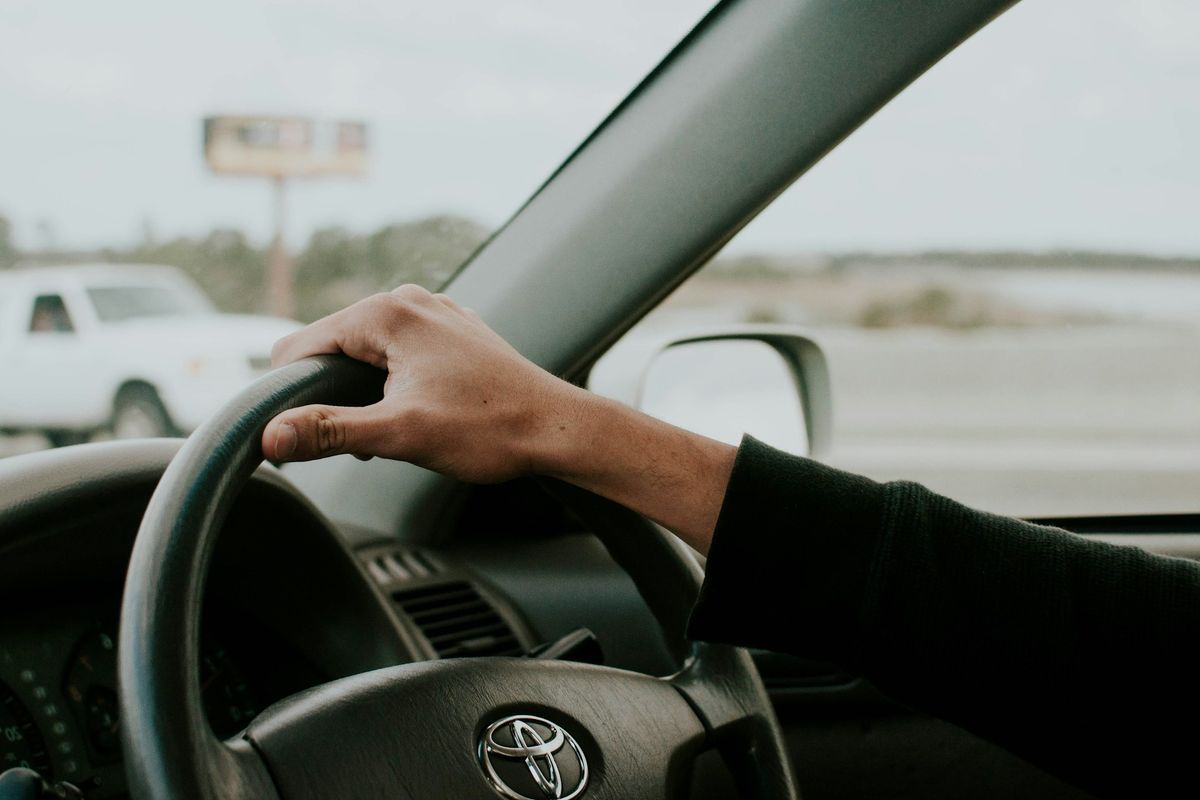
Before you drive anywhere, your instructor will walk you through all the car controls. This usually takes 10-15 minutes and covers:
The Pedals
Accelerator (gas), brake, and clutch (if manual). Where they are, what they do, how to use them.
The Gear Stick
Where each gear is, when to use them, how to find neutral. (Automatic learners: this is much simpler. Just P, R, N, D.)
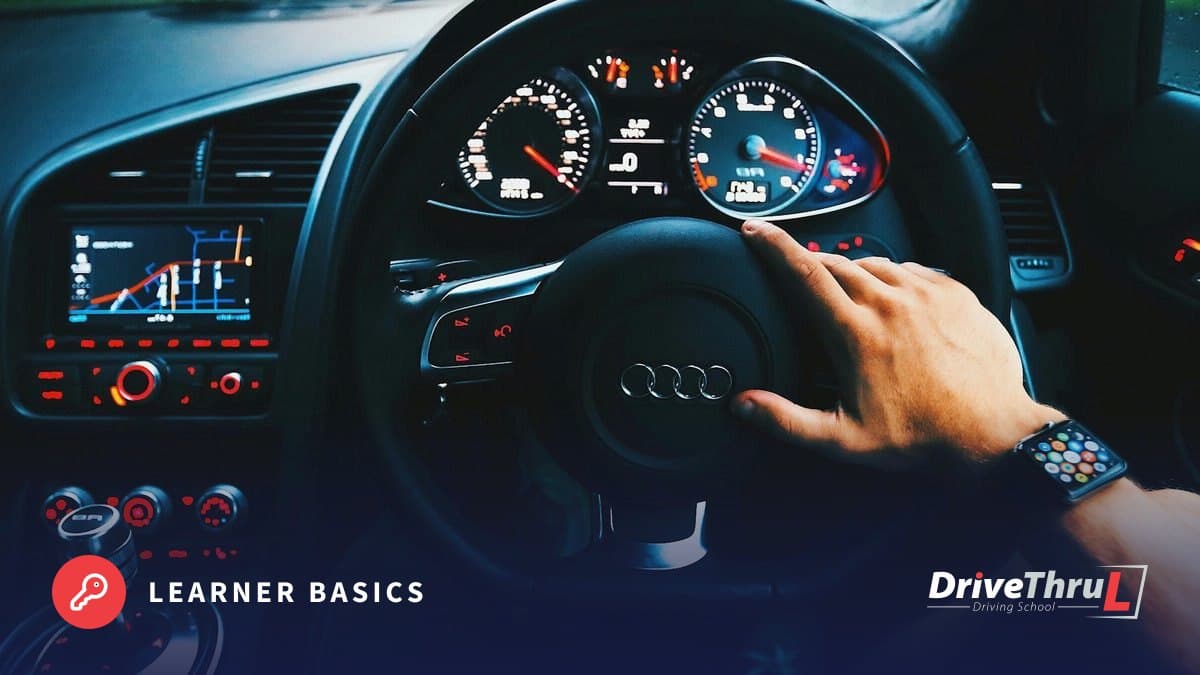
The Steering Wheel
Correct hand positions, how to turn effectively, where the horn and controls are.
The Mirrors
How to adjust them for your height and position. Interior mirror, door mirrors, and why they matter.
The Handbrake
When to use it, how to release it, why it's important on hills.
Secondary Controls
Indicators, wipers, lights, demister. Where everything is and how it works.
Your instructor will let you practise finding and using each control before you move. There's no rush. You'll have time to get comfortable.
Your First Drive: Step by Step
Your instructor will take you to a quiet area. Typically a residential street with minimal traffic, an empty car park, or a quiet industrial estate. Here's what you'll practise:
1. Moving Off
You'll learn the sequence for starting the car and pulling away:
- Prepare: Clutch down (if manual), select first gear
- Observe: Check mirrors and blind spot
- Move: Release handbrake, gently balance clutch and accelerator
Your instructor will guide you through each step, often doing the first few attempts alongside you or with verbal prompts.
2. Stopping
Once you're moving, you'll practise stopping safely:
- Check your mirror
- Gently press the brake
- Press the clutch as you slow (manual)
- Come to a smooth stop
- Apply the handbrake
You'll practise this several times until it starts to feel natural.
3. Steering
You'll practise keeping the car on a straight course and making gentle turns. Your instructor might set up simple exercises. Driving along a road, turning around at the end, and driving back.
4. Gear Changes (Manual Only)
If you're learning manual, you'll begin practising changes between first and second gear. This involves:
- Coming off the accelerator
- Pressing the clutch
- Moving the gear stick
- Smoothly releasing the clutch while adding gas
It feels awkward at first. Everyone says so. But it gets easier surprisingly quickly.
Will I Drive on Real Roads?
Yes, most likely. Most learners do some driving on quiet public roads during their first lesson.
Remember: Your Instructor Has Dual Controls
Your instructor can brake and steer from the passenger seat if needed. They're constantly monitoring the road and will intervene before anything dangerous happens. You are never in danger during a professional lesson. The chances of an incident are extremely low.
The roads your instructor chooses for your first lesson will be:
- Quiet and low traffic
- Wide with good visibility
- Straightforward. No complex junctions
- Appropriate for your ability level
No roundabouts, no busy junctions, no dual carriageways. Just gentle practice in a safe environment.
Common First-Lesson Worries (Answered)
"What if I stall?"
You will stall. Everyone does. It is so normal on first lessons that your instructor won't even blink. They'll calmly talk you through restarting, and you'll carry on. Stalling is not a sign of failure, it's a sign that you're learning clutch control, one of the trickiest parts of driving. Every qualified driver has stalled, including your instructor.
"What if I hit something?"
Your instructor has dual controls and years of experience. They're constantly watching the road ahead and ready to step in before anything happens, not after. The chances of an incident during a professional lesson are extremely low. Keeping learners safe is literally their job.
"What if I'm terrible?"
Nobody is "good" at driving on their first lesson. That's why it's called a lesson, not a test. Your instructor has taught hundreds of complete beginners and seen every level of ability and every kind of mistake. Nothing you do will surprise them. The only thing that matters is that you try.
"What if I'm too nervous to concentrate?"
Nervousness is expected, and your instructor will work at your pace. If you need to stop and take a breath, that's fine. If you need to go slower, that's fine too. The physical act of doing something often reduces anxiety faster than thinking about it, so many learners find the nerves fade once they're actually driving.
After Your First Lesson
At the end of the lesson, your instructor will:
- Recap what you covered
- Give you honest feedback. What you did well and what needs practice
- Discuss what you'll work on next time
- Answer any questions you have
Many learners are surprised by how much they achieve in just one hour. You'll probably have:
- Learned all the basic controls
- Moved off and stopped multiple times
- Steered the car on a straight road
- Done some gear changes (if manual)
- Driven on quiet public roads
You might feel tired afterwards. That's completely normal. Driving requires intense concentration, and your brain has been working hard on a completely new skill. The fatigue passes as driving becomes more familiar over future lessons.
Making the Most of Your First Lesson
A few tips to maximise what you get from your first lesson:
- Arrive ready: Don't be flustered or rushing. Be ready 5 minutes before your instructor arrives.
- Communicate: Tell your instructor if something isn't clear, if you're nervous, or if you want to try something again.
- Don't aim for perfection: Aim for progress. Every mistake is a learning opportunity.
- Enjoy it: This is the beginning of something exciting. Try to enjoy the experience.
Ready to get started? Book your first lesson with DriveThruL. our friendly East London instructors will make sure your first time behind the wheel is a positive experience you'll remember.