The emergency stop is one of the most important skills you will learn as a driver. While it is only tested on around one in seven driving tests, every driver must know how to stop quickly and safely in an emergency. This guide covers exactly how to perform the manoeuvre perfectly.
Safety First
The emergency stop simulates a real emergency. In actual driving, you might need to stop suddenly to avoid a child running into the road, a car pulling out unexpectedly, or debris falling from a vehicle ahead.
📋 What Is the Emergency Stop?
The emergency stop (also called the controlled stop) is a manoeuvre that tests your ability to stop the car as quickly and safely as possible while maintaining full control. Unlike normal braking where you slow gradually, an emergency stop requires rapid, decisive action.
On the driving test, the examiner will take you to a quiet, straight road with good visibility. They will explain what will happen before asking you to perform the stop. The key word here is "controlled". You need to stop quickly, but not in a way that causes the car to skid or swerve.
Test Frequency
The emergency stop is tested on approximately 1 in 7 driving tests. Even if you are not asked to perform one on your test, you must still know how to do it. Your instructor will ensure you have practised this thoroughly.
👋 The Examiner's Signal
Before the manoeuvre, the examiner will pull you over and explain what will happen. They will say something like:
"Shortly, I am going to ask you to carry out an emergency stop. When I raise my hand and say 'Stop!', I want you to stop the car as quickly and safely as possible. Before giving the signal, I will check behind to make sure it is safe."
When the examiner is ready, they will:
- Check behind to ensure no vehicles are following too closely
- Raise their right hand in front of the dashboard
- Say "Stop!" in a firm, clear voice
Your job is to react immediately when you see the hand signal and hear the command. Do not wait for a second signal or hesitate.
🚷 Step by Step Emergency Stop Technique
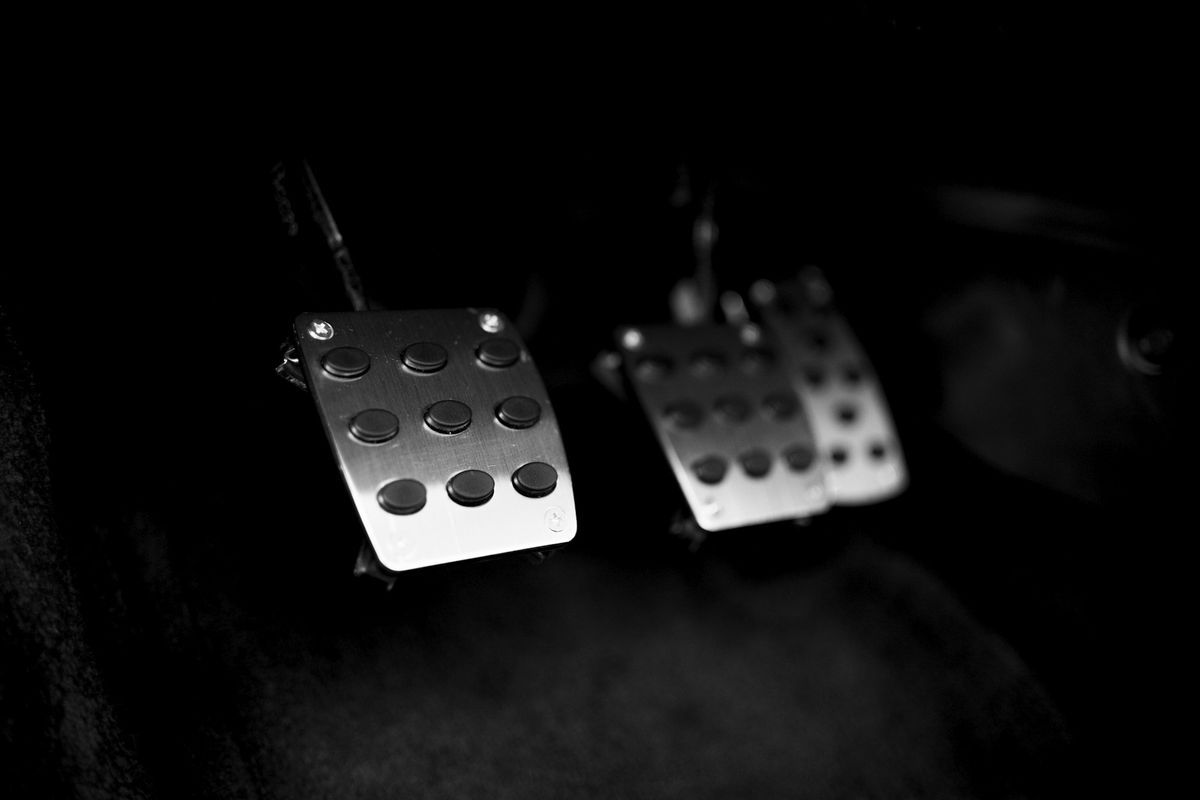
Follow these steps to perform a perfect emergency stop:
React Immediately
As soon as you see the signal and hear "Stop!", begin braking. Do not check mirrors first. In a real emergency, every millisecond counts.
Brake Firmly and Progressively
Push the brake pedal firmly with your right foot. Apply maximum pressure quickly but progressively. Do not stamp on the pedal. Keep both hands on the steering wheel.
Clutch Down Just Before Stopping
Press the clutch pedal down just before the car comes to a complete stop. This prevents stalling. Do NOT press the clutch at the same time as the brake.
Secure the Car
Once stopped, keep your feet on both pedals. Apply the handbrake. Select neutral. The examiner will then tell you the exercise is complete.
Critical Timing: Clutch Last, Not First
Pressing the clutch too early removes engine braking and increases your stopping distance. The clutch should only go down when the car is about to stop, not at the start of braking. This is one of the most common mistakes learners make.
🛠 ABS vs Non ABS Braking
Modern cars are equipped with Anti lock Braking Systems (ABS), but the technique differs slightly depending on your car. Here is a comparison:
ABS-Equipped Cars
- • Brake hard and keep your foot firmly on the pedal
- • The ABS will pulse automatically to prevent wheel lock
- • You may feel vibration through the pedal. This is normal
- • Do NOT pump the brakes. Let ABS do its job
- • Maintain steering control throughout
Most modern learner cars have ABS fitted as standard.
Non ABS Cars
- • Brake firmly but be ready to ease off if wheels lock
- • If you feel the wheels skid, release pressure briefly
- • Cadence braking: pump brakes rapidly if needed
- • Locked wheels mean loss of steering control
- • Requires more skill and practice
Ask your instructor if your training car has ABS.
How to Tell If Your Car Has ABS
When you turn the ignition on, an ABS warning light will briefly illuminate on the dashboard. It usually shows the letters "ABS" in a circle. If this light stays on while driving, the ABS system may have a fault. Your instructor will confirm your training car's braking system.
🚲 Moving Off After the Emergency Stop
Once the examiner tells you the exercise is complete, you need to move off safely. This is where many learners make mistakes, so follow this procedure:
✔ Safe Moving Off Procedure
- 1. Prepare the car: Clutch down, select first gear
- 2. Set the gas: Light pressure on the accelerator
- 3. Find the bite: Bring clutch to biting point
- 4. Check centre mirror: Look for following traffic
- 5. Check right door mirror: Look for overtaking vehicles
- 6. Check right blind spot: Turn and look over your shoulder
- 7. Signal if necessary: Indicate right if needed
- 8. Move off when safe: Release handbrake and go
Why the Blind Spot Check Matters
After an emergency stop, other vehicles may have stopped behind you or pulled out to pass. A cyclist or motorcyclist could be approaching on either side. The blind spot check is essential and must not be rushed. Failing to check properly before moving off can result in a serious fault.
❌ Common Emergency Stop Mistakes
These are the most common errors learners make during the emergency stop. Avoid these to give yourself the best chance:
❌ Pressing the clutch too early
This removes engine braking and increases stopping distance. Clutch down only when nearly stopped.
❌ Not braking hard enough
Some learners are afraid to brake firmly. In an emergency, you need maximum safe braking pressure.
❌ Checking mirrors before braking
In a real emergency, you brake first. Looking in mirrors wastes precious stopping time.
❌ Taking hands off the steering wheel
Keep both hands on the wheel throughout. You need full steering control during the stop.
❌ Forgetting observations before moving off
Failing to check mirrors and blind spots before pulling away is a common serious fault.
❌ Steering while braking heavily
Swerving during an emergency stop can cause loss of control. Brake in a straight line.
🎯 Practice Tips for the Emergency Stop
The key to performing a perfect emergency stop is practice. Here is how to prepare:
🌟 Practice Recommendations
- ✔ Practice on quiet, straight roads with good visibility
- ✔ Have your instructor check behind before giving the signal
- ✔ Practice at different speeds (20-30 mph)
- ✔ Repeat until your reaction becomes automatic
- ✔ Practice in dry and wet conditions (carefully)
- ✔ Learn how ABS feels in your training car
- ✔ Practice the full sequence including moving off
- ✔ Time your reaction from signal to brake application
Never Practice Alone
Always practise emergency stops with your instructor or a legal supervisor (over 21, qualified to drive that type of car, and holding a full licence for 3 years) who can check for traffic and make sure the location is safe. Learners must never drive without a supervisor.
📝 What the Examiner Is Looking For
During the emergency stop, the examiner assesses the following:
✅ What They Want to See
- • Quick reaction to the signal
- • Firm, progressive braking
- • Car stopping in a straight line
- • Full control maintained throughout
- • Proper securing of the vehicle
- • Full observations before moving off
❌ What Causes Serious Faults
- • Excessively slow reaction
- • Loss of control (skidding, swerving)
- • Taking hands off the wheel
- • Not stopping quickly enough
- • Moving off unsafely without checks
- • Stalling and not securing car
💭 Frequently Asked Questions
Will I fail if I stall during the emergency stop?
Stalling alone is not usually a serious fault if you stopped safely and secured the car properly. However, if you stall because you pressed the clutch too late and it affected control, this could be marked as a fault.
What if I press the clutch at the same time as the brake?
This reduces your braking efficiency by removing engine braking. It will likely be marked as a driving fault. The clutch should only go down just before the car stops.
Is the emergency stop always done at the same speed?
The examiner will ask you to perform it from a normal driving speed, usually around 20-30 mph. They will choose a suitable straight road with good visibility.
What if I do not get an emergency stop on my test?
It is only tested on about 1 in 7 tests. If you do not get it, you will still need to demonstrate safe braking throughout your test. The skill is still essential for real world driving.
🎯 Final Thoughts
The emergency stop is a straightforward manoeuvre when you understand the technique and have practised it properly. Remember these key points:
- React immediately to the examiner's signal. Do not hesitate
- Brake firmly with progressive pressure. Do not be afraid to brake hard
- Clutch down last, just before the car stops
- Keep both hands on the steering wheel throughout
- Check thoroughly before moving off again
With practice, your response will become instinctive. This is exactly what you need for both the driving test and for staying safe on the roads throughout your driving life.
🚷
Master the Emergency Stop with Expert Instruction
Our DVSA approved instructors in East London will help you perfect your emergency stop technique and all other test manoeuvres.
Book a Lesson Today →