Parallel parking is often considered the most challenging manoeuvre for learner drivers, but with the right technique and practice, it becomes second nature. This guide breaks down the process into simple, repeatable steps that will have you parking confidently in no time.
Master This Essential Skill
Parallel parking is used daily by drivers everywhere. Learning it properly now will serve you for life.
🎯 When Parallel Parking Appears on the Test
During your UK driving test, the examiner will ask you to perform one reversing manoeuvre from a choice of three:
Parallel Park
Park behind a stationary vehicle
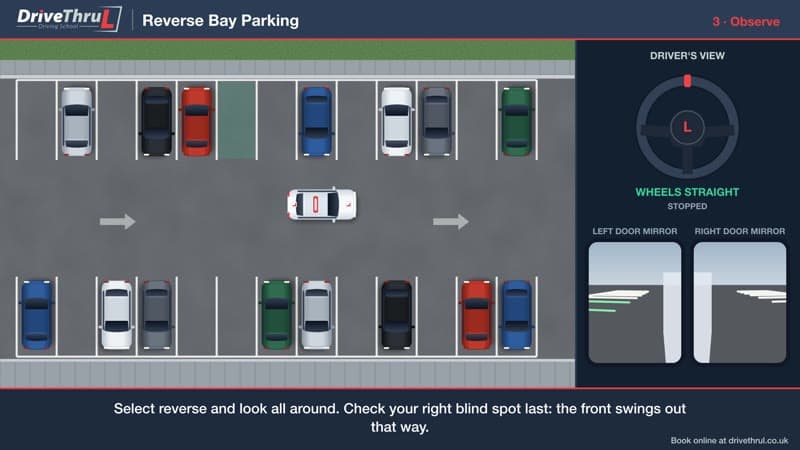
Bay Parking
Reverse into a parking bay
Pull Up on Right
Reverse two car lengths back
The examiner will say something like: "I'd like you to pull up on the left behind this parked car. This is the parallel parking exercise. When you're ready, please park reasonably close to and parallel with the kerb."
💡 Good to Know
You have about two car lengths of space behind the target vehicle to complete the manoeuvre. There's no strict time limit, so take your time and focus on accuracy.
🔄 The Reference Points Method
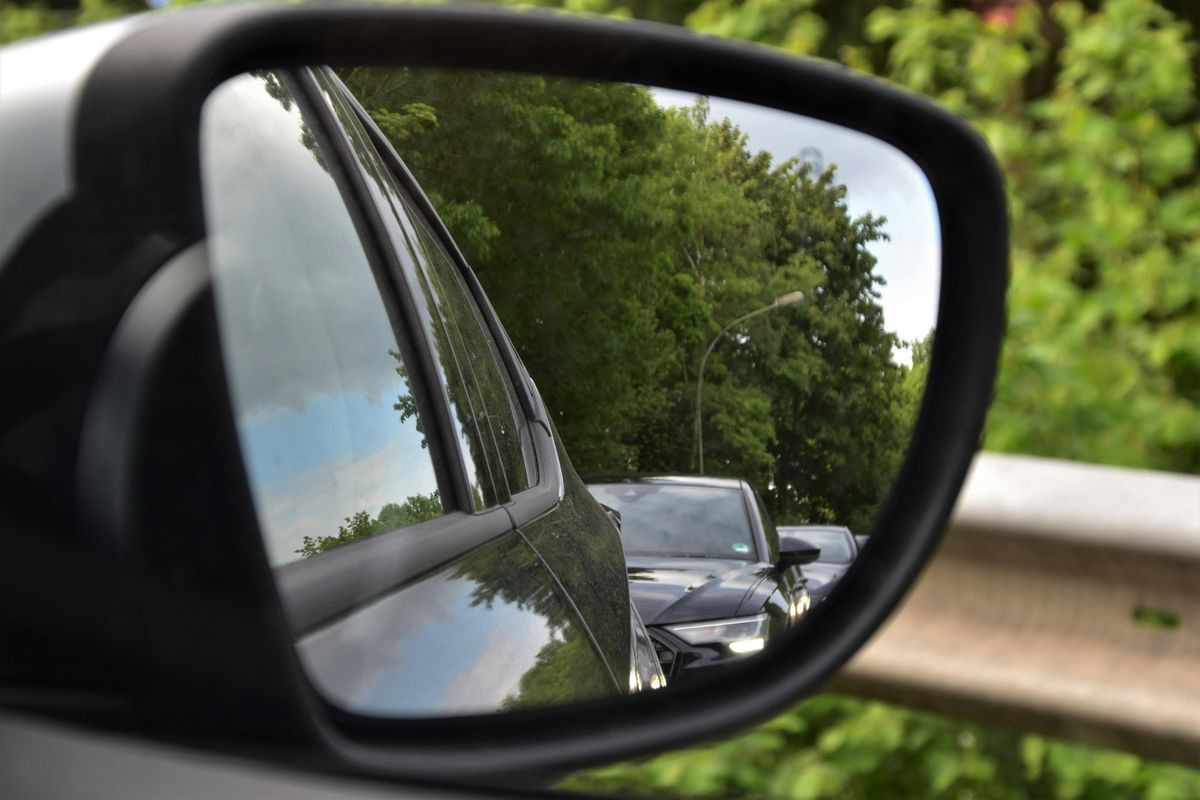
Reference points are visual markers that help you know exactly when to turn the steering wheel. Every car is slightly different, so you'll need to adjust these for your specific vehicle. Here are the key reference points:
🗺 Key Reference Points
Starting Position
Door mirrors level with the front of the target car, about 1 metre gap between vehicles
First Turn Point
Back of target car visible in your rear passenger window (approximately 45-degree angle)
Straighten Point
Kerb appears in bottom corner of left door mirror, or front of your car clears the back of target car
Final Straighten
Car is parallel with kerb, approximately 30cm away
Prefer counting turns? The 1-2-1 method
Many instructors teach the same manoeuvre by turns of the wheel instead of full lock: one turn left until you are at about 40 to 45 degrees, two turns right to swing the front in, then one turn left to straighten. It is set out step by step, with left mirror and reversing camera tips, on our parallel parking page. Use whichever your instructor teaches.
🚗 Step by Step Instructions
Follow these steps carefully. Remember: slow speed with quick steering is the key to success.
Pull Alongside the Target Vehicle
- ✔ Signal left and pull up alongside the parked car
- ✔ Leave about 1 metre gap between your car and the target vehicle
- ✔ Align your door mirrors with the front of the target car
- ✔ Stop and select reverse gear
Observation Check
- ✔ Check all mirrors thoroughly (interior, left, right)
- ✔ Look over both shoulders to check blind spots
- ✔ Check the road ahead and behind for approaching traffic
- ✔ Only proceed when completely safe
Reverse to First Reference Point
- ✔ Begin reversing slowly with wheels straight
- ✔ Look mainly through rear window, glancing at mirrors
- ✔ Stop when the back of the target car appears in your rear passenger window
- ✔ This is approximately when your rear bumper is level with their rear bumper
Full Lock Left
- ✔ Apply full lock steering to the left (towards the kerb)
- ✔ Continue reversing very slowly while turning
- ✔ Keep checking mirrors and surroundings constantly
- ✔ Watch for the kerb appearing in your left mirror
Straighten and Full Lock Right
- ✔ When the kerb appears in your left mirror, straighten wheels briefly
- ✔ As the front of your car clears the back of the target car, apply full lock right
- ✔ This swings your front end in towards the kerb
- ✔ Continue reversing slowly
Final Straighten and Stop
- ✔ As the car becomes parallel with the kerb, straighten the wheels
- ✔ Stop when you're about 30cm from the kerb and reasonably parallel
- ✔ Apply handbrake and select neutral
- ✔ You can adjust forward or back if needed
⚠ Common Mistakes and How to Fix Them
Even experienced drivers occasionally misjudge a parallel park. Here are the most common errors and how to correct them:
Ending Up Too Far from Kerb
You turned right too early or didn't apply enough left lock initially
Fix: Pull forward with right lock, then reverse with left lock to get closer
Hitting the Kerb
You turned left too much or too early
Fix: Pull forward with right lock, creating more room, then reverse carefully
Ending Up at an Angle (Not Parallel)
Steering timing was off, or you didn't straighten wheels at the right moment
Fix: If front is sticking out, reverse with left lock. If back is out, pull forward with right lock
Running Out of Space
Started too close to the target car or turned too late
Fix: Pull forward and start again. The examiner expects you to correct mistakes
🔄 How to Correct If Going Wrong
The examiner knows that manoeuvres don't always go perfectly first time. What matters is how you respond to problems.
✅ Correction Techniques
Pull forward to create space: If you're running out of room or heading towards the kerb, pull forward with opposite lock
Start again: It's perfectly acceptable to pull out and restart the manoeuvre from the beginning
Make adjustments: Once parked, you can pull forward or reverse to improve your position
Stay calm: Taking your time shows control. Rushing leads to more mistakes
"The best candidates are not those who do everything perfectly first time. They're the ones who recognise when something isn't right and calmly make corrections. That's real world driving."
👤 What examiners look for, as our instructors teach it
🎯 What Examiners Are Looking For
Understanding the marking criteria helps you focus on what really matters:
👁 Observations
- ✔ All round awareness before starting
- ✔ Continuous observation throughout
- ✔ Responding appropriately to other road users
- ✔ Pausing if traffic approaches
🛠 Control
- ✔ Smooth steering movements
- ✔ Appropriate speed (slow and controlled)
- ✔ Good clutch control
- ✔ No excessive revving or stalling
🎯 Accuracy
- ✔ Reasonably close to the kerb (30-45cm)
- ✔ Reasonably parallel with the kerb
- ✔ Within two car lengths of space
- ✔ Not mounting the kerb
💪 Response to Problems
- ✔ Recognising when things aren't right
- ✔ Making safe corrections
- ✔ Staying calm under pressure
- ✔ Completing the manoeuvre safely
💡 Pass Criteria
You will pass this manoeuvre if you complete it safely with good observations, finish reasonably close to and parallel with the kerb, and make appropriate corrections if needed. You do not need to be perfect.
🚗 Tips for Different Car Sizes
The size and type of car you drive affects your reference points. Here's how to adapt:
Small Cars (Fiat 500, Ford Fiesta)
- ✔ Reference points come up quickly, so be ready
- ✔ Less steering required as turning circle is tighter
- ✔ Can fit into smaller spaces
Medium Cars (Ford Focus, VW Golf)
- ✔ Standard reference points usually work well
- ✔ Good balance of visibility and manoeuvrability
- ✔ Most driving school cars fall into this category
Larger Cars (SUVs, Estate Cars)
- ✔ Need more space and earlier turns
- ✔ Reference points appear later in mirrors
- ✔ Allow extra room when pulling alongside
- ✔ Be more careful with rear visibility
📚 Practice Tips for Success
Like any skill, parallel parking improves with deliberate practice. Here's how to make the most of your practice time:
🌱 Beginner Practice
- 📍 Start in quiet car parks with cones or markers
- 📍 Practice each step separately before combining
- 📍 Use the same reference points consistently
- 📍 Take as much time as you need
🏅 Advanced Practice
- 📍 Practice on real streets with parked cars
- 📍 Try different sized gaps
- 📍 Practice on hills (remember to angle wheels!)
- 📍 Time yourself to build confidence
💡 Pro Tip: Practice Both Sides
While the test always involves parking on the left, practicing parallel parking on both sides of the road (in private areas) helps you understand the manoeuvre better and builds overall confidence with reversing.
📝 Quick Reference Checklist
Before You Start:
- ☑ Signal left
- ☑ Check mirrors
- ☑ Check blind spots
- ☑ Pull alongside with 1m gap
Key Steps:
- ☑ Reverse to reference point
- ☑ Full lock left
- ☑ Straighten, then full lock right
- ☑ Straighten and stop
🔥 Common Questions
How close to the kerb do I need to be?
Aim for about 30cm (roughly a ruler's length). The examiner allows reasonable tolerance. Being slightly further out is better than hitting the kerb.
What if I touch the kerb?
A light touch is usually marked as a minor fault. Mounting the kerb or hitting it hard could be a serious fault. If you feel it happening, stop immediately and pull forward to correct.
Can I use the reversing camera?
Yes, but you must also use your mirrors and look around directly. The camera is an aid, not a replacement for proper observations. Examiners will mark you down if you rely solely on the camera.
How many attempts do I get?
There's no set number. You can make corrections and adjustments as needed. However, excessive shuffling back and forth without progress, or getting completely stuck, could result in a fault.
🚗 Master Parallel Parking with Expert Instruction
Our experienced instructors will teach you the reference point method tailored to your car, giving you confidence for test day and beyond.
Book a Lesson Today →