Dual carriageways can feel intimidating for learner drivers. Higher speeds, more lanes, and the need to merge with fast moving traffic all add pressure. But with the right knowledge and practice, you can handle dual carriageways confidently and safely.
Why This Matters
Your test route may include a dual carriageway, so examiners can assess your ability to join, position, and leave safely at higher speeds.
🔍 What is a Dual Carriageway?
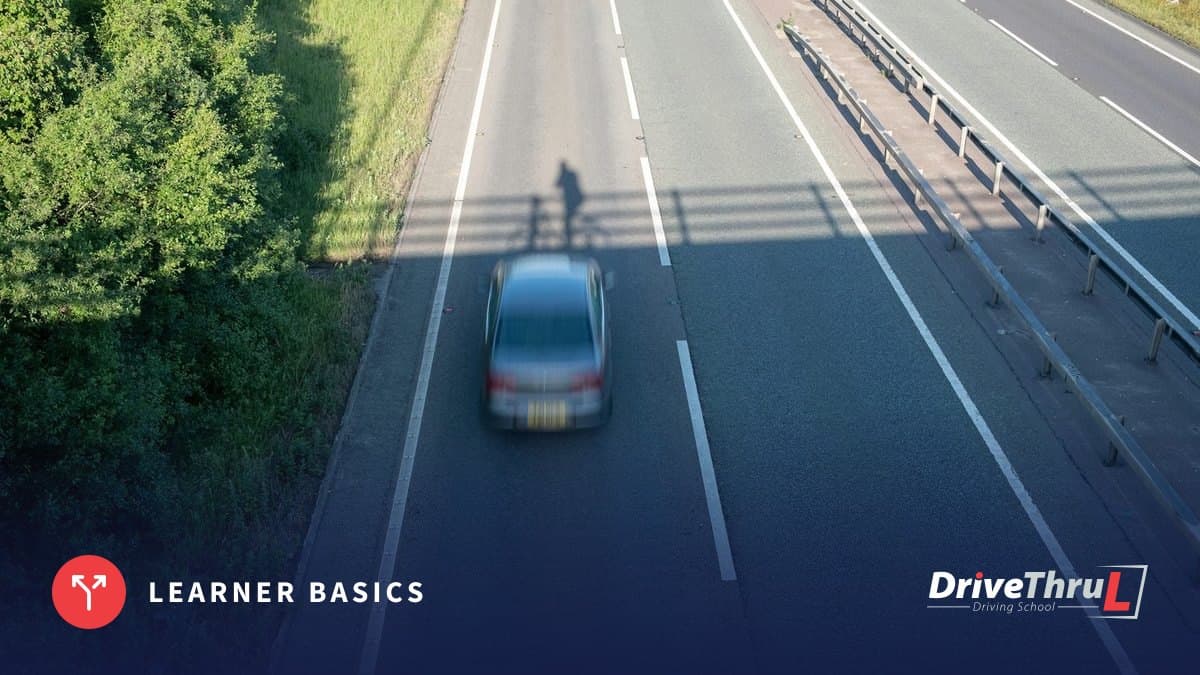
A dual carriageway is a road where traffic travelling in opposite directions is separated by a central reservation (a physical barrier, grass verge, or crash barrier). This is the key difference from a single carriageway, where oncoming traffic is only separated by road markings.
Dual Carriageway
- ✔ Central reservation separates directions
- ✔ Usually 2+ lanes each way
- ✔ National speed limit: 70mph
- ✔ Learners CAN drive on these
Motorway
- ✔ Blue signs with white text
- ✔ Hard shoulder (usually)
- ✔ National speed limit: 70mph
- ✖ Learners only with an approved instructor in a dual-controlled car, and never on the test
💡 Key Difference
The main practical difference for learners: you can drive on dual carriageways with any qualified supervisor, but on a motorway only with an approved driving instructor in a dual-controlled car, and motorways are never used on the test. However, both have similar speed limits and driving techniques.
📈 Speed Limits on Dual Carriageways
Understanding speed limits is crucial. The national speed limit sign (white circle with black diagonal stripe) means different things on different roads.
Speed Limit Warning
Always check the signs. Many dual carriageways have variable or reduced limits, especially near junctions, in urban areas, or during roadworks. The A12 and A13 frequently have 50mph sections.
🚦 Joining a Dual Carriageway
Joining via a slip road is often the most nerve-wracking part for learners. The key is building sufficient speed and timing your merge correctly.
📋 Step by Step: Joining from a Slip Road
🎯 Safe Joining Procedure
Check your mirrors early
As you enter the slip road, check mirrors and assess the traffic on the main carriageway.
Build your speed
Use the slip road to accelerate to match the speed of traffic on the main carriageway. This is typically 50-70mph.
Signal right
Indicate your intention to join. Signal early so other drivers can see you.
Check your blind spot
A quick glance over your right shoulder is essential. Mirrors have blind spots.
Find your gap and merge
Look for a safe gap and merge smoothly. Adjust your speed if needed to fit into a gap.
Cancel your signal
Once you have joined, cancel your indicator if it has not done so automatically.
❌ Common Mistakes When Joining
Stopping at the end of the slip road (only do this if absolutely necessary)
Joining too slowly, forcing others to brake
Not checking the blind spot before merging
Pushing into a gap that is too small
🛣 Lane Discipline and Positioning
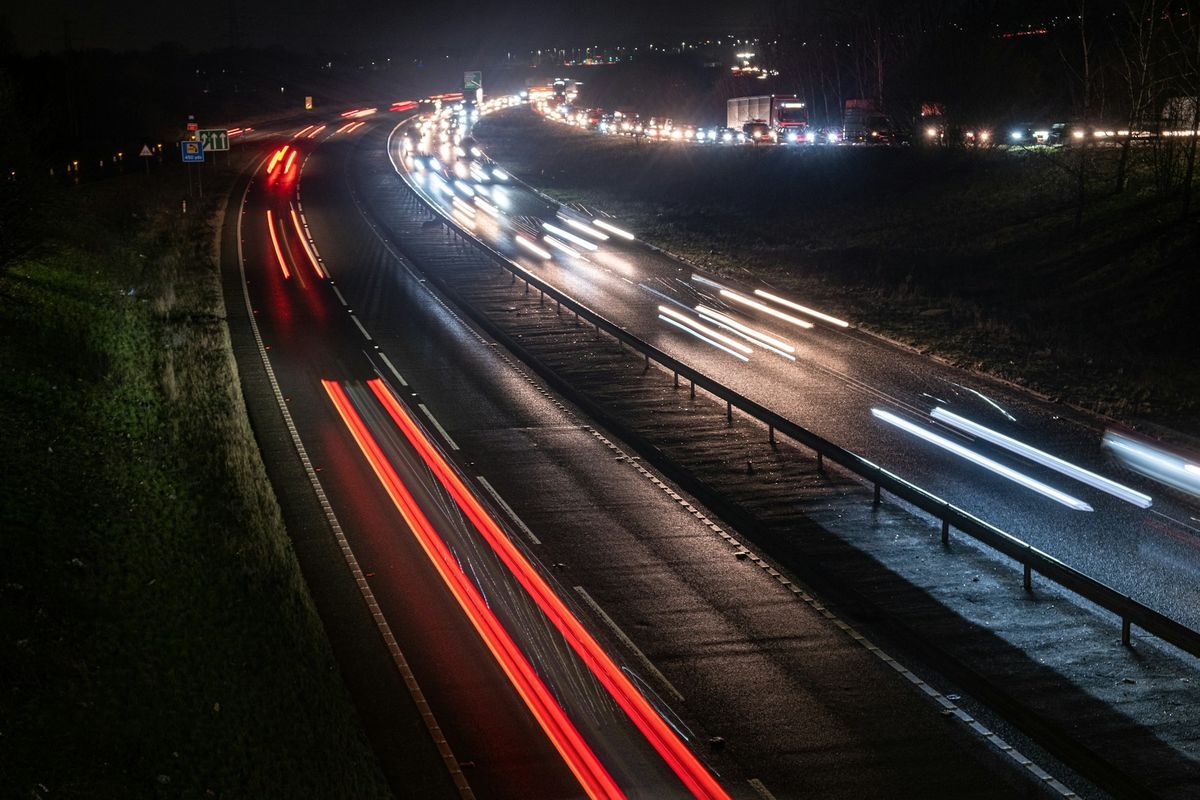
Correct lane discipline is essential for safety and is closely watched by examiners. The basic rule is simple: keep left unless overtaking.
🚗 Two Lane Dual Carriageway
Left Lane (Lane 1)
Your normal driving lane. Stay here unless overtaking.
Right Lane (Lane 2)
Use for overtaking or turning right. Return to the left lane after passing.
🚗 Three Lane Dual Carriageway
Left Lane
Normal driving
Middle Lane
Overtaking lane 1
Right Lane
Overtaking only
Lane Hogging is Illegal
Staying in the middle or right lane when the left lane is clear is an offence. It frustrates other drivers and forces them to undertake (which is also dangerous). Police can issue fines of up to £100 and 3 penalty points for careless driving.
🚀 Overtaking Safely
Overtaking on a dual carriageway requires careful planning and execution. Never rush an overtake.
📋 Safe Overtaking Procedure
Check mirrors: Interior and right door mirror for traffic behind
Signal right: Let others know your intention
Check blind spot: Quick glance over right shoulder
Move out and accelerate: Pass with purpose, do not dawdle
Check left mirror: Ensure you can see the overtaken vehicle
Signal left and return: Move back to the left lane
✅ Do
- Only overtake when you have a clear view ahead
- Complete the overtake decisively
- Return to the left lane when safe
- Allow plenty of space before moving back
❌ Do Not
- Overtake on the left (undertaking)
- Cut in too close after overtaking
- Overtake in bad weather or poor visibility
- Exceed the speed limit to overtake
🚨 Leaving a Dual Carriageway
Exiting requires planning ahead. Missing your exit because you were in the wrong lane is a common mistake.
📋 Exit Procedure
Read the signs early
Countdown markers at 300, 200 and 100 yards warn you of upcoming exits.
Move to the left lane
Be in the left lane well before the 300 yard marker. Use MSM routine.
Signal left
Indicate as you pass the 300 yard marker.
Enter the slip road
Maintain your speed until you are on the slip road.
Slow down on the slip road
Only reduce speed once you are fully on the slip road. Check your speedometer as 30mph will feel very slow.
💡 Speed Blindness Warning
After driving at 70mph, 30mph feels extremely slow. Many drivers accidentally speed in the area after leaving a dual carriageway. Check your speedometer and consciously slow down.
⚠ Common Hazards on Dual Carriageways
Tailgating
Drivers following too closely. Maintain a 2 second gap (4 seconds in rain). If someone tailgates you, gradually slow down to increase your safety margin.
Lane Hogging
Other drivers staying in the middle lane unnecessarily. Be patient. Do not undertake them. Overtake on the right if safe.
Sudden Braking
Traffic can slow suddenly due to accidents or congestion. Keep scanning ahead and maintain safe following distances.
Weather Conditions
Rain reduces visibility and grip. Fog can appear suddenly. Reduce speed and increase following distance in poor conditions.
📍 East London Dual Carriageways: A12, A13, A127
If you are learning to drive in East London, you will likely encounter these major routes. Each has its own characteristics.
📍 A12 (East London to Ipswich)
Key Characteristics
- 🚗 Major route through Hackney, Wanstead, Redbridge
- ⚠ Heavy traffic, especially rush hours
- 📈 Variable speed limits (40-70mph)
- 🚦 Frequent lane changes needed
Tips for Learners
- 💡 Practice during quieter times first
- 💡 Watch for the Blackwall Tunnel approach
- 💡 Be ready for the Green Man junction
📍 A13 (East London to Southend)
Key Characteristics
- 🚗 Links Limehouse to Barking, Dagenham, Thurrock
- ⚠ Very busy during commuter hours
- 📈 Mix of 50mph and 70mph sections
- 🚦 Complex junctions near Beckton
Tips for Learners
- 💡 The Canning Town section is urban. Watch speed limits.
- 💡 Barking Riverside exit is new. Expect confused drivers.
- 💡 Practice the A13/A406 interchange
📍 A127 (Southend Arterial Road)
Key Characteristics
- 🚗 Links Romford to Southend
- ⚠ Fast-flowing traffic outside rush hour
- 📈 70mph for most of the route
- 🚦 Used in Hornchurch test routes
Tips for Learners
- 💡 Gallows Corner is a challenging junction
- 💡 Watch for the 50mph limit near Romford
- 💡 Good for building confidence at higher speeds
📈 Dual Carriageway vs Motorway: Key Differences
| Feature | Dual Carriageway | Motorway |
|---|---|---|
| Speed Limit | Usually 70mph (varies) | 70mph (smart motorways may vary) |
| Learners Allowed? | ✔ Yes | With an instructor only |
| Sign Colour | Green on primary routes, white with black text on other routes | Blue with white text |
| Hard Shoulder | Usually no | Usually yes (or refuge areas) |
| Pedestrians/Cyclists | Sometimes allowed | Never allowed |
| Traffic Lights | Sometimes (at junctions) | Overhead signals; some slip roads have traffic lights |
🎓 What Examiners Look For
During your driving test, the examiner will assess your dual carriageway driving on several key points.
📋 Examiner's Checklist
Safe and confident joining from slip roads
Appropriate speed for conditions
Correct lane positioning (keeping left)
Effective mirror use throughout
Safe overtaking technique
Proper use of signals
Safe following distance
Smooth exit from the carriageway
🎯 Top Tip for Your Test
Examiners do not expect perfection. They want to see that you can handle dual carriageways safely and confidently. Even if you do not overtake anyone, that is fine. What matters is that you demonstrate good observation, appropriate speed, and correct positioning.
📚 Summary: Key Points to Remember
🚗 Joining
- Build speed on the slip road
- Check mirrors and blind spot
- Merge smoothly into a safe gap
🛣 Lane Discipline
- Keep left unless overtaking
- Never hog the middle lane
- Return to left after overtaking
📈 Speed
- National limit is 70mph
- Always check for lower limits
- Adjust for weather and traffic
🚨 Leaving
- Plan ahead and read signs
- Move left well before exit
- Slow down on the slip road only
🚗 Ready to Master Dual Carriageway Driving?
Our instructors will take you through the A12, A13, and A127 until you feel completely confident. Book your lesson today and build the skills you need for your test.
Book Your Lesson →