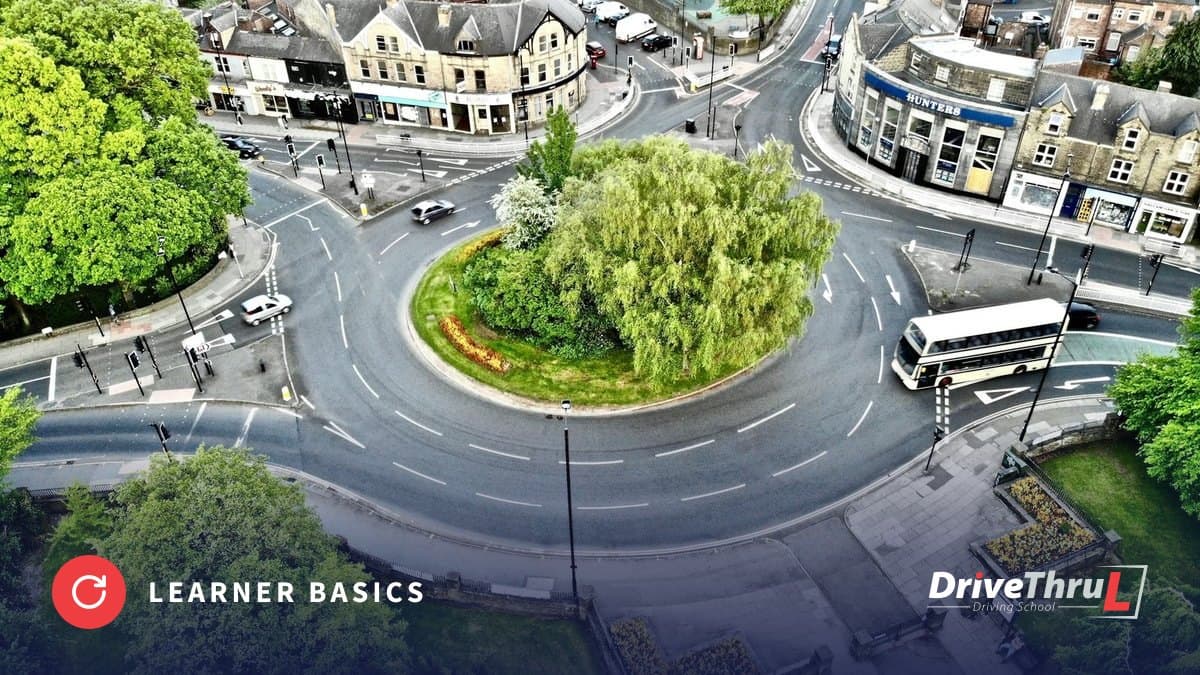
Roundabouts are one of the most challenging aspects of learning to drive, but they do not have to be intimidating. Once you understand the rules and practise the techniques, navigating roundabouts becomes second nature. This comprehensive guide covers everything you need to know.
Your Goal: Confident Roundabout Navigation
By the end of this guide, you will understand every type of roundabout and know exactly how to approach them safely.
🔄 Types of Roundabouts

Not all roundabouts are the same. Understanding the different types will help you approach each one with the right technique.
Mini Roundabouts
Small white circles painted on the road, often found in residential areas and town centres.
- • Can be driven over by larger vehicles if needed
- • Same rules apply as standard roundabouts
- • Give way to traffic from the right
- • Common at tight junctions
Standard Roundabouts
Single lane roundabouts with a raised central island. The most common type you will encounter.
- • Usually have 3-4 exits
- • One lane on approach and exit
- • Clear give way lines at entry
- • Central island with road signs
Multi Lane Roundabouts
Larger roundabouts with two or more lanes on approach, on the roundabout itself, and on exits.
- • Lane markings guide your route
- • Requires careful lane discipline
- • Check mirrors before changing lanes
- • Often found on A-roads and dual carriageways
Spiral / Turbo Roundabouts
Modern design where lanes spiral outward, guiding you naturally to your exit without lane changes.
- • Physical lane dividers prevent cutting across
- • Choose your lane before entering
- • Follow the lane to your exit
- • Becoming more common in the UK
💡 The MSM Routine: Your Roundabout Checklist
The Mirror-Signal-Manoeuvre routine is essential for every roundabout approach. Following this routine consistently will keep you safe and impress the examiner.
🔎 MSM Breakdown
Mirrors
Check your interior and side mirrors to assess traffic behind and beside you. Know what is happening around your vehicle before making any decisions.
Signal
Signal your intentions clearly and in good time. This tells other road users where you are planning to go.
Manoeuvre
Position your vehicle correctly, adjust speed, and complete the turn or manoeuvre safely.
💡 Remember PSL
Within the Manoeuvre phase, think P-S-L: Position, Speed, Look. Get in the correct position, adjust your speed, and look carefully before proceeding.
🚗 Lane Positioning for Different Exits
One of the biggest challenges for learners is knowing which lane to use. Here is a clear breakdown for standard roundabouts with the typical left, ahead, and right exits.
Turning Left
(1st Exit)
Going Straight
(2nd Exit)
Turning Right
(3rd+ Exit)
📌 Key Rule
Always follow road markings. If lane arrows on the road differ from the general rule, the road markings take priority. Some roundabouts have specific lane allocations painted on the approach.
⚠ Who Has Priority?
Understanding priority rules is crucial for safe roundabout navigation.
🔴 The Golden Rule
Give way to traffic already on the roundabout coming from your right.
This means traffic approaching from your left must give way to you if you are already on the roundabout.
Traffic on the roundabout
Has priority over traffic waiting to enter
Cyclists and horse riders
May stay in the left lane even when turning right. Give them extra space.
Long vehicles
May need to straddle lanes. Do not try to overtake or squeeze past.
❌ Common Mistakes Learners Make
Awareness of common errors will help you avoid them during your lessons and test.
🚫 Mistakes to Avoid
Forgetting to signal on exit
Always signal left when leaving the roundabout, even if going straight ahead. This tells other drivers you are exiting.
Cutting across lanes
Stay in your lane on the roundabout. Do not drift into other lanes or cut corners. Check mirrors before any lane change.
Poor observations
Look right, left, and ahead before entering. Keep checking as you go around. Do not just look once and hope for the best.
Wrong lane selection
Check road markings early on approach. Getting into the wrong lane forces you to either take the wrong exit or make a dangerous lane change.
Stopping unnecessarily
If the roundabout is clear, keep moving. Stopping when you do not need to can confuse drivers behind you and cause issues.
Going too fast
Reduce speed on approach so you have time to assess the situation. Rushing onto a roundabout is dangerous.
📍 East London Roundabouts: Local Knowledge
If you are learning to drive in East London, you will encounter some memorable roundabouts. Here is what to expect at the most notable ones.
Green Man Roundabout (Leytonstone)
Located at the junction of Whipps Cross Road, this roundabout connects multiple busy roads and has traffic lights controlling entry from some approaches.
Tips for Green Man:
- • Watch for pedestrians crossing to the Green Man pub area
- • Traffic lights control some entries. Wait for green if lights are present
- • Lane markings can be worn. Follow the car ahead if unsure
- • Very busy at rush hour. Be patient and wait for a safe gap
Redbridge Roundabout (A12)
A major multi lane roundabout where the A12 meets the North Circular. This is one of the busiest roundabouts in East London.
Tips for Redbridge:
- • Multiple lanes. Choose your lane well in advance using overhead signs
- • Fast moving traffic. Match speed when joining but do not rush
- • Partial traffic light control. Follow the signals carefully
- • Stay alert for lorries and buses that may straddle lanes
- • Practice during quieter times first (mid morning, early afternoon)
Charlie Browns Roundabout (A406/A104)
Named after a former pub, this roundabout connects the North Circular with Woodford New Road. It features traffic lights and multiple lanes.
Tips for Charlie Browns:
- • Traffic light controlled entries reduce complexity
- • Follow lane arrows carefully. They are clearly marked
- • Buses frequently use this roundabout. Give them space
- • The A406 exits are fast moving. Be confident when joining
- • Often appears on Loughton test routes
💡 Local Instructor Tip
Ask your instructor to take you through these roundabouts during quieter periods first. Once you understand the layout, practise during busier times to build confidence.
🛠 How to Handle Multi Lane Roundabouts
Multi lane roundabouts require more planning but follow the same principles. Here is a step by step approach.
📋 Step by Step Multi Lane Roundabout Guide
Read the signs early
Look for overhead signs and road markings showing which lane you need. These appear well before the roundabout.
Get into position early
Use MSM (Mirror, Signal, Manoeuvre) to change lanes safely well before the roundabout. Do not leave it until the last moment.
Adjust speed on approach
Slow down so you can assess traffic and choose a safe gap. Look right for traffic already on the roundabout.
Stay in your lane on the roundabout
Follow the curve of your lane. Do not drift into adjacent lanes. Keep checking mirrors for vehicles beside you.
Check mirrors before exiting
Before moving left to exit, check your left mirror for cyclists or vehicles in your blind spot.
Signal left to exit
After passing the exit before yours, signal left to show you are leaving the roundabout.
⚠ If You Miss Your Exit
Stay calm and go around again. It is far safer to complete another circuit than to cut across lanes or make a sudden manoeuvre. The examiner will not fail you for going around twice.
🎓 What Examiners Look For
During your driving test, the examiner will assess your roundabout skills carefully. Here is what they expect to see.
What They Want to See
- • Proper use of MSM routine on approach
- • Correct lane selection based on exit
- • Appropriate speed reduction
- • Good observations. Looking right and all around
- • Clear signalling on approach and exit
- • Smooth steering and speed control
- • Mirror checks before changing lanes or exiting
- • Giving way correctly to traffic from the right
Common Faults
- • Not checking mirrors before signalling
- • Wrong lane selection for exit
- • Forgetting to signal when exiting
- • Cutting across lanes
- • Poor observations when joining
- • Entering when not safe (pulling out on traffic)
- • Hesitating too long when it is safe to go
- • Incorrect positioning on the roundabout
"Roundabouts are where many learners pick up faults. But with good habits and practice, they become one of the easiest parts of the test. The key is consistency: same routine, every time."
👤 DriveThruL Instructor Team
📚 Quick Reference Summary
📋 Roundabout Cheat Sheet
| Exit | Approach Lane | Signal In | Signal Out |
|---|---|---|---|
| Left (1st) | Left lane | Left | Keep left signal on |
| Ahead (2nd) | Left lane* | None | Left after passing exit before |
| Right (3rd+) | Right lane | Right | Left after passing exit before |
*Unless road markings indicate otherwise. Always follow painted arrows.
🚗 Ready to Master Roundabouts?
Our instructors specialise in helping learners conquer East London roundabouts. From Green Man to Redbridge, we will make sure you are confident and test ready.
Book Your Lesson Today →