Night driving presents unique challenges for learner drivers. Reduced visibility, glare from oncoming vehicles, and the effects of tiredness all require additional skills and awareness. This guide covers everything you need to know to drive safely after dark.
Night Driving: A Different Challenge
RoSPA reports that around 40% of collisions happen in the hours of darkness, despite there being far less traffic. Understanding how to drive safely after dark is essential.
💡 Legal Requirements for Driving at Night
UK law has specific requirements for lighting when driving at night. Understanding these rules is essential for both your safety and avoiding penalty points.
📝 When You Must Use Headlights
- ● At night, from half an hour after sunset to half an hour before sunrise, on any road without lit street lights. Your sidelights must be on from sunset to sunrise
- ● When visibility is seriously reduced (generally less than 100 metres)
- ● In any conditions where you cannot see clearly ahead
Sidelights Are Not Enough
A common mistake is using sidelights (parking lights) instead of headlights. Sidelights alone are not enough to see by. At night you must use headlights on any road without street lights, and you should use dipped headlights in built up areas too.
💡 Dipped vs Full Beam Headlights
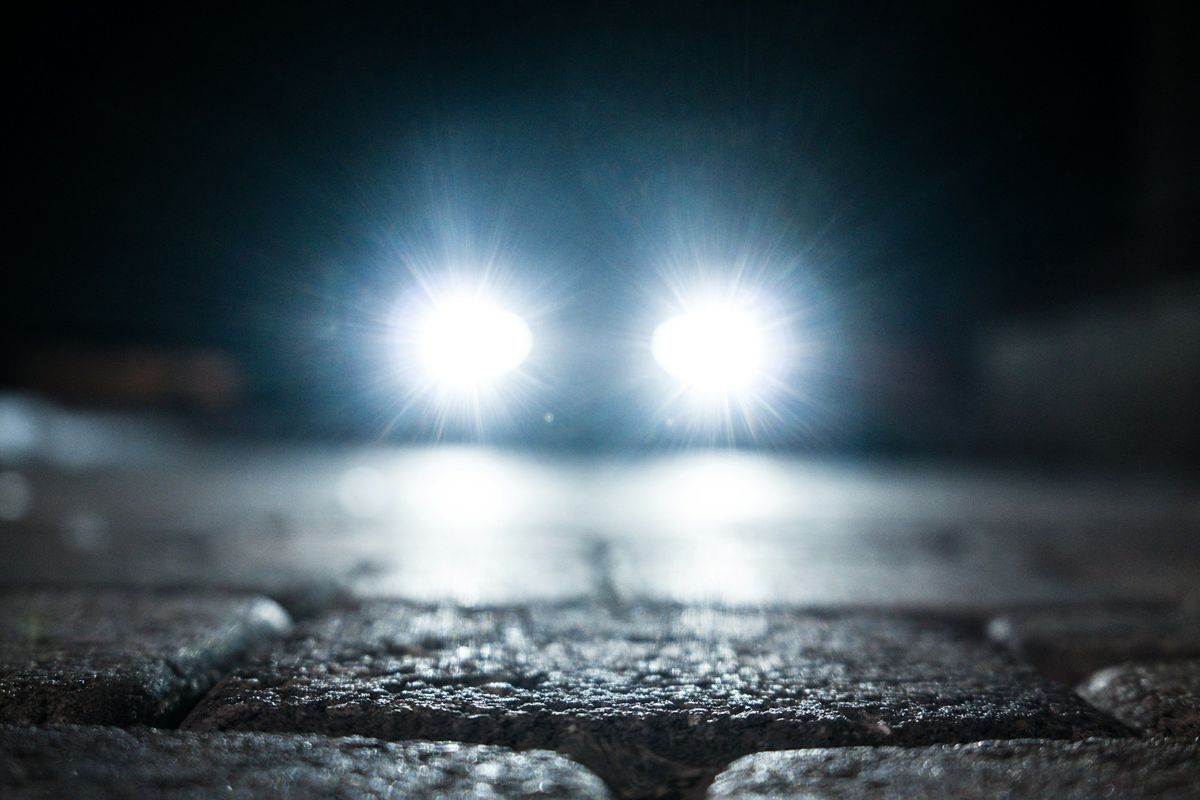
Knowing when to use dipped headlights versus full beam is crucial for safe night driving and avoiding dazzling other road users.
Dipped Headlights
Your default option for most night driving situations.
Use When:
- ✔ In built up areas with street lighting
- ✔ Following another vehicle
- ✔ Meeting oncoming traffic
- ✔ On lit motorways and dual carriageways
- ✔ In fog, rain, or snow (with fog lights if needed)
Full Beam Headlights
Maximum illumination for unlit roads.
Use When:
- ✔ On unlit roads with no oncoming traffic
- ✔ In rural areas without street lighting
- ✔ When you need maximum forward visibility
Switch Off When:
- ❌ Approaching oncoming vehicles
- ❌ Following another vehicle
- ❌ Entering built up areas
Dashboard Indicator
When full beam is on, a blue symbol appears on your dashboard. This helps you remember to dip your lights when needed. Get familiar with your car's headlight controls before driving at night.
😶 Dealing with Glare from Oncoming Vehicles
Being dazzled by oncoming headlights is one of the most common concerns for learner drivers at night. Here's how to handle it safely.
👁 How to Avoid Being Dazzled
Look towards the left kerb
Instead of looking directly at oncoming lights, focus your eyes on the left edge of the road. This maintains your lane position while avoiding direct glare.
Slow down if necessary
If you are severely dazzled, reduce your speed gradually. Never brake harshly or swerve.
Use the left kerb as your guide
The road markings and kerb on your left will help you stay in position until the vehicle passes.
Allow your eyes to readjust
After the vehicle passes, your eyes may take a few seconds to readjust. Be cautious during this period.
Never Retaliate
If another driver fails to dip their headlights, never flash your lights back at them. This creates a dangerous situation where both drivers are dazzled. Simply look away and wait for them to pass.
🚗 Speed and Stopping Distances at Night
One of the most critical aspects of night driving is adjusting your speed to account for reduced visibility. Your stopping distance effectively increases because you cannot see hazards as early.
📊 The Visibility Rule
You must be able to stop within the distance you can see to be clear
On dipped headlights, you can typically see about 30-40 metres ahead. This means you should drive at a speed that allows you to stop within that distance, which is around 30 mph in good conditions.
Daytime
Full visibility ahead
Normal stopping distance
Night (Dipped)
30-40m visibility
Reduce speed significantly
Night + Rain
Reduced + wet roads
Double your stopping distance
🚶 Pedestrians and Cyclists at Night
Vulnerable road users are much harder to see at night, especially if they are wearing dark clothing. Extra vigilance is essential.
👁 Spotting Vulnerable Road Users
🚲 Cyclists
- • Look for red rear lights and reflectors
- • Watch for wobbling lights indicating a cyclist
- • Give extra space when overtaking
🚶 Pedestrians
- • Scan pavements near crossings
- • Watch for movement near parked cars
- • Be extra careful near pubs and takeaways
High-Risk Areas
Be especially cautious near bus stops, zebra crossings, schools, and entertainment areas. Pedestrians may step out unexpectedly, particularly if they have been drinking or are distracted by phones.
😴 Tiredness and Fatigue
Fatigue is a major cause of serious accidents at night. Your body's natural rhythm means you are more likely to feel drowsy between midnight and 6am, and in the early afternoon.
⚠ Warning Signs of Fatigue
- ● Heavy eyelids or frequent blinking
- ● Yawning repeatedly
- ● Difficulty keeping your head up
- ● Wandering or disconnected thoughts
- ● Missing road signs or exits
- ● Drifting between lanes
✔ How to Combat Fatigue
Opening Windows Does Not Work
Common "tricks" like opening windows, turning up the radio, or blasting cold air do not combat fatigue effectively. The only real solutions are sleep or caffeine combined with a short nap. If you are too tired, find somewhere safe to stop.
❄ Winter Nights and Weather Conditions
Winter brings additional challenges for night driving, including earlier darkness, fog, frost, and rain.
❄ Winter Night Driving Checklist
Before You Set Off
- ✔ Clear all windows and mirrors of ice/condensation
- ✔ Check all lights are working
- ✔ Ensure washer fluid is topped up (winter grade)
- ✔ Check tyre tread and pressure
While Driving
- ✔ Use dipped headlights in fog (not full beam)
- ✔ Use fog lights only when visibility is below 100m
- ✔ Keep windscreen demisted at all times
- ✔ Allow extra stopping distance on wet/icy roads
Fog Light Rules
You must only use fog lights when visibility is seriously reduced (below 100 metres). Using them in clear conditions is illegal and dazzles other drivers. Remember to switch them off when visibility improves.
📋 Can You Take Your Driving Test at Night?
This is a common question for learner drivers, especially those learning during winter months.
🕑 Driving Test and Darkness
Most driving tests take place on weekdays during the day, but some centres offer evening and weekend tests at a higher fee. This means:
- ● Summer tests will be in daylight
- ● Winter tests (especially early morning or late afternoon) may include some darkness or low light conditions
- ● If your test includes darkness, the examiner will expect you to use lights appropriately
Tip for Winter Tests
If you are taking your test in winter, practice with your instructor in low-light conditions beforehand. You should be comfortable with using headlights, identifying hazards in reduced visibility, and demonstrating good observation at junctions.
🏙 East London Night Driving Challenges
Driving at night in East London presents some specific challenges that learners should be aware of.
📍 Local Night Driving Considerations
🚗 A12 and A13 Dual Carriageways
These major routes are well lit but busy at night. Watch for vehicles joining from slip roads and maintain safe following distances.
🏙 Canary Wharf and Docklands
Well lit business areas but complex road layouts with one way systems. Some tunnels (Limehouse Link) require quick adjustment from darkness to bright lighting. More on driving lessons in Docklands.
🏢 Residential Areas (Bow, Poplar, Tower Hamlets)
Narrower streets with parked cars on both sides. Watch for pedestrians crossing between vehicles and cyclists without lights.
🚗 Green Man Roundabout and Major Junctions
Multi lane roundabouts require extra concentration at night. Lane markings may be harder to see, so approach at a speed that allows you to read road signs clearly.
Minicabs and Delivery Vehicles
East London has heavy minicab and delivery traffic at night, especially around Stratford, Whitechapel, and Mile End. These vehicles may stop suddenly or make unexpected manoeuvres. Keep your distance and anticipate their movements.
✅ Night Driving Safety Checklist
Use this checklist to ensure you are prepared for night driving.
✔ Before Setting Off
- ✔ All lights working (headlights, brake lights, indicators)
- ✔ Windscreen clean inside and out
- ✔ Mirrors clean and adjusted
- ✔ Dashboard brightness adjusted
- ✔ Know how to operate headlight controls
- ✔ Washer fluid topped up
- ✔ Well rested and alert
- ✔ Route planned (especially for unfamiliar areas)
🚗 While Driving
- ✔ Use dipped headlights in built up areas
- ✔ Dip lights for oncoming traffic
- ✔ Drive at a speed you can stop in the distance you see
- ✔ Extra observation at junctions
- ✔ Watch for pedestrians and cyclists
- ✔ Take regular breaks on long journeys
- ✔ Pull over safely if dazzled or tired
- ✔ Keep a safe following distance
🌟 Final Thoughts
Night driving is a skill that develops with practice. As a learner, ask your instructor to include some evening lessons in your training, especially during winter months. The more experience you gain in different lighting conditions, the more confident and safer you will become.
Remember: the key principles are use lights correctly, reduce speed, increase following distance, and stay alert. Master these, and you will be well prepared for any night driving situation.
🌙
Learn to Drive Confidently, Day or Night
Our DVSA approved instructors in East London will help you master night driving skills with confidence.
Book a Lesson Today →