Information road signs are the helpful rectangles that tell you about services, facilities, lanes, and areas. Unlike regulatory signs (which give orders) or warning signs (which alert you to hazards), information signs simply provide useful facts to help you drive and navigate.
🔴 How to Recognise Information Signs
Information signs are rectangular (or sometimes square). Their background colour tells you the type of information at a glance:
🔵
Blue Signs
General information: parking, bus lanes, one way systems, pedestrian zones, cycle routes.
⚪
White Signs
Local information: place names, distances, speed cameras, hospitals, congestion zones.
🫖
Brown Signs
Tourist information: heritage sites, attractions, scenic routes, visitor centres.
🔵 Common Blue Information Signs
📍 Blue = General Information. These rectangular signs with a blue background give you useful details about facilities, lanes, and areas ahead.
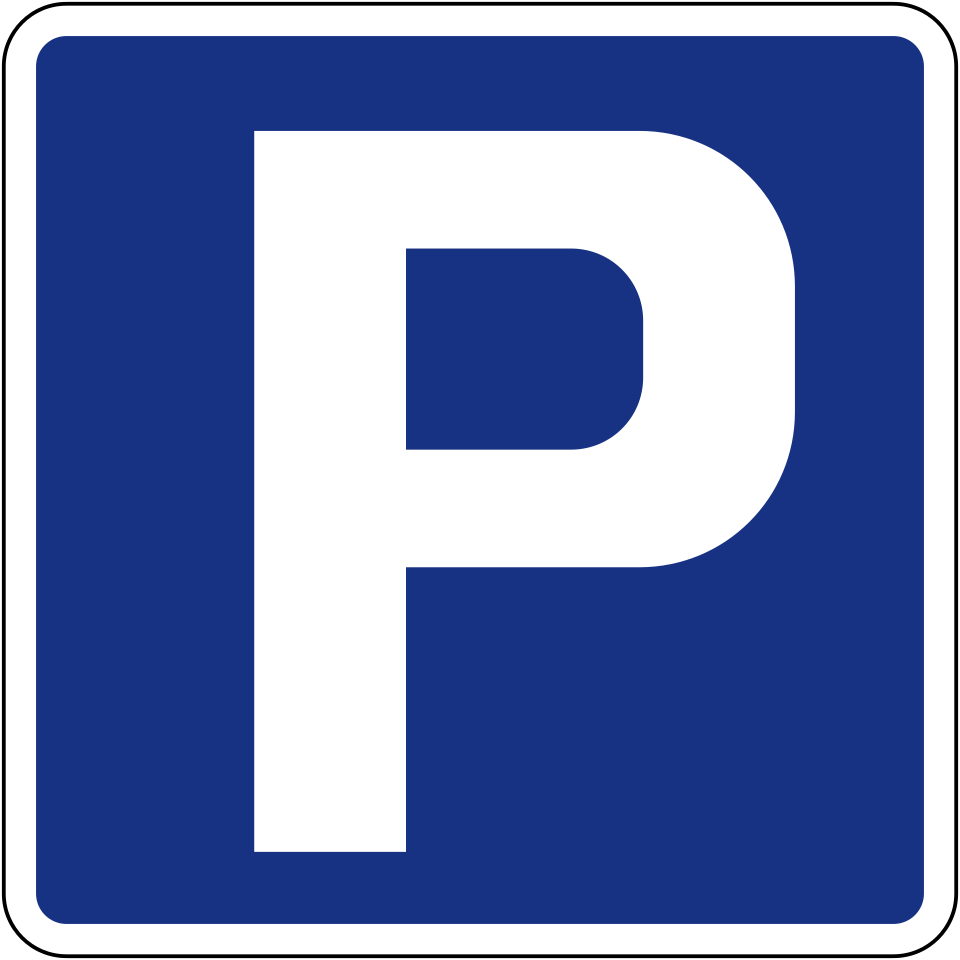
Parking (P)
A white P on a blue background indicates a parking place ahead. Additional text may show time restrictions, charges, or permit requirements. Always check supplementary plates beneath the sign for the details that determine whether you can actually park there.
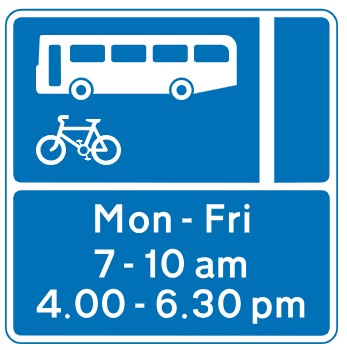
Bus Lane
A white bus symbol on a blue rectangle, often with operating hours. During the hours shown, only buses (and sometimes taxis, cyclists, and motorcyclists) may use the lane. Driving in an active bus lane results in a fine, enforced by cameras in most cities.
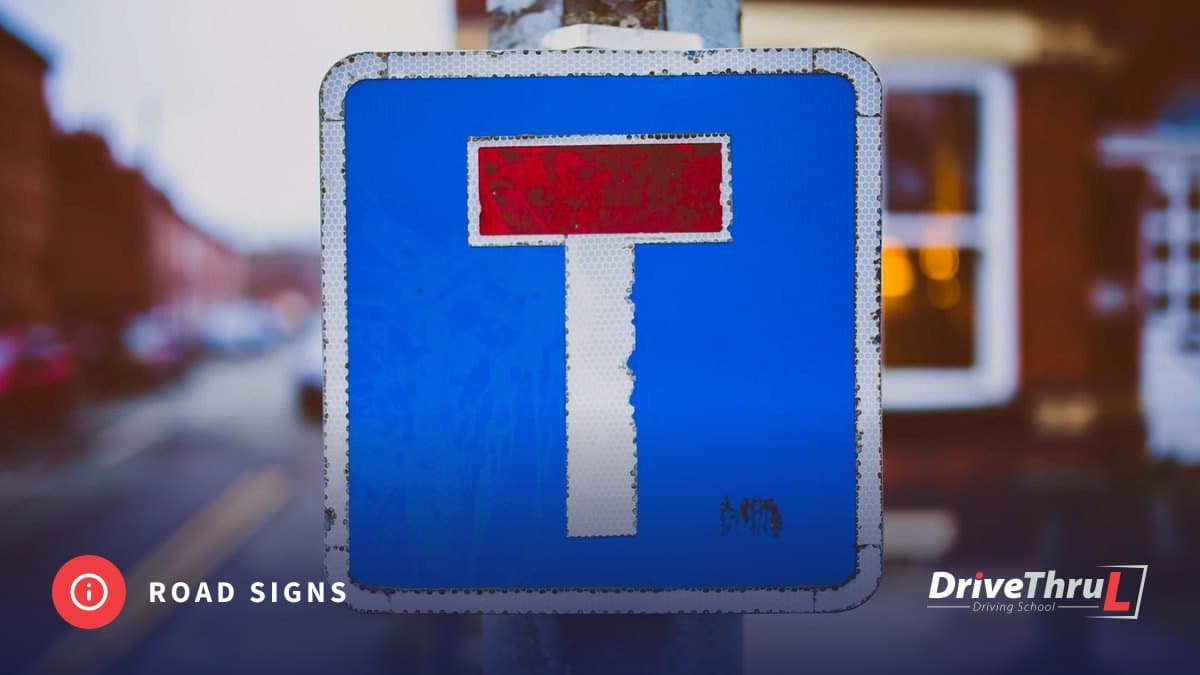
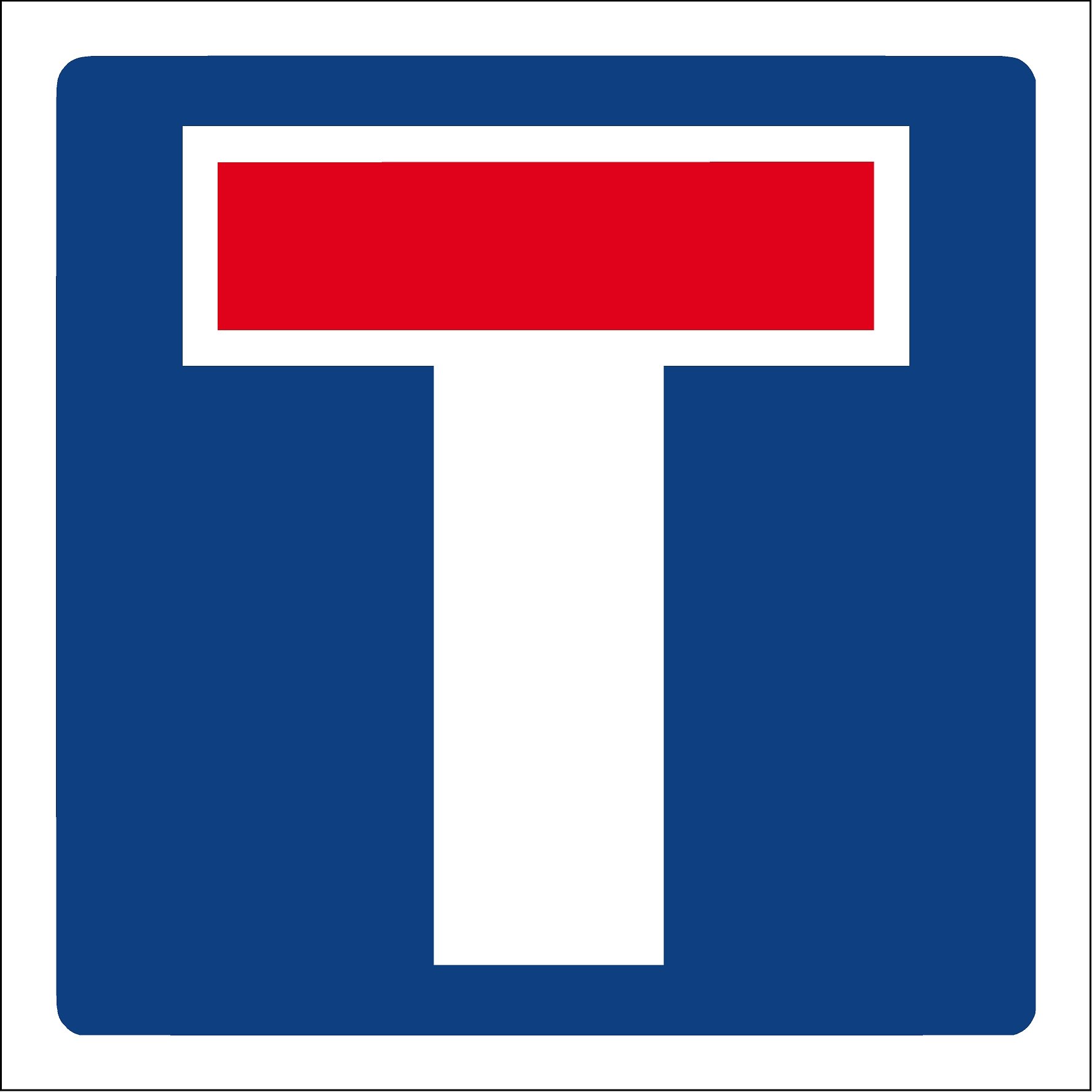
No Through Road
A blue rectangle with a dead-end road diagram. This tells you the road ahead is a cul-de-sac with no exit. Useful for route planning, saving you driving to the end and having to turn around.
Pedestrian Zone
A pedestrian zone starts at a sign showing a red-ringed no vehicles roundel, with panels giving the hours and which vehicles may enter (often early-morning deliveries). It ends at a sign with a grey version of the roundel. Driving in the zone outside permitted times can result in a fixed penalty notice.
Cycle Route
A white bicycle on a blue circle or rectangle indicates a route for cyclists, or a shared-use path. As a driver, be aware of these routes and watch for cyclists entering or leaving them.
💡 Key Rule: Bus lane operating hours matter. If a sign says "Mon-Fri 7:00-10:00", any vehicle can use the lane at 10:01 am. Always read the times on the sign before assuming you cannot use the lane.
⚪ White Information Signs
📍 White = Local Information. These signs provide locally relevant facts: place names, speed camera warnings, hospitals, and zone boundaries.
Speed Camera
A camera symbol on a white rectangle warns that speed cameras are operating in the area. While the sign itself is informational, the speed limit is regulatory and enforceable. These signs serve as a reminder to check your speed.
Hospital
A red hospital sign with a white H shows a hospital with A&E or an urgent treatment centre. A blue H sign means the hospital has no A&E. In the vicinity of hospitals, avoid unnecessary noise and do not use your horn unless there is a genuine safety emergency.
Congestion Charge Zone
A white C inside a red circle marks the boundary of a congestion charge zone (primarily in London). You must pay the daily charge during operating hours. Cameras read your number plate automatically, and failure to pay results in a penalty notice.
End of Motorway
The motorway symbol with a red diagonal line tells you motorway regulations no longer apply. Different speed limits and road rules take effect. For example, learner drivers are now permitted on the road.
⚠️
Congestion Charge Warning
The London congestion charge is £18 a day, or £21 if you pay by midnight on the third day after you travel. If you do not pay, the penalty is £180, reduced to £90 if paid within 14 days. Watch for the red C boundary signs.
🫖 Brown Tourist Signs
📍 Brown = Tourist Information. These signs direct you to visitor attractions, heritage sites, and points of interest.
Brown signs with white text and symbols are not heavily tested in the theory test, but they are useful for navigation and appear in the Highway Code. If you see a brown sign, it is pointing you towards a place of interest rather than giving an instruction.
📝 Quick Reference: Information Sign Penalties
| Offence |
Fine |
Points |
| Driving in a bus lane |
Up to £160 in London, usually £70 elsewhere |
None |
| Driving in a pedestrian zone |
Up to £160 in London, usually £70 elsewhere |
None |
| Congestion charge (unpaid) |
£180 (£90 if paid within 14 days) |
None |
| Parking on double yellow lines |
Up to £160 in London, usually £70 elsewhere |
None |
📚 Information Signs in the Theory Test
📝 Common Theory Test Questions:
- "You see a bus lane sign showing Mon-Fri 7-10 am. Can you drive in the lane at 11 am on a Tuesday?" (Yes, you can)
- "What does a white P on a blue background mean?"
- "What should you do when you see a hospital sign?"
- "What does a brown road sign indicate?"
Understanding the context behind each sign is more important than memorising them all. If you know the colour system and what each category means, you can work out the answer logically.
🚀 Test Your Knowledge
Explore all sign categories or practise with theory test questions.
Ready to Start Driving?
Join thousands of learners who passed with DriveThruL. DVSA registered instructors across East London.