Lane Arrangement Signs
Signs showing how lanes merge, end or are gained ahead. Common on dual carriageways and at slip roads.
6 signs
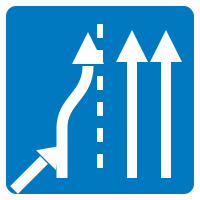
Traffic Merging from the Left
Blue sign, left lane arrow curving right with a joining arrow below
The left-hand lane ends and traffic joining from a slip road on the left merges into it. If you are in the left-hand lane you must move right in good time. If you are in the next lane, expect vehicles joining alongside you and leave a gap rather than braking hard.
Rule 259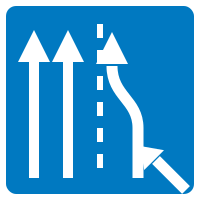
Traffic Merging from the Right
Blue sign, right lane arrow curving left with a joining arrow below
The mirror image of the merge-from-left sign. The right-hand lane ends and traffic joining from the right merges in. Less common in the UK, but used where a road joins on the offside.
Rule 259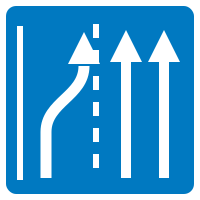
Left-Hand Lane Closed Ahead
Blue sign, left lane arrow curving right, no joining arrow
The left-hand lane ends ahead and traffic in it must move right. Unlike the merging sign there is no slip road involved, so nothing is joining. Change lanes early rather than driving to the very end of the lane.
Rule 134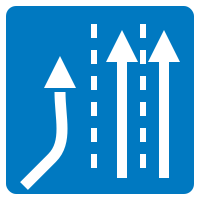
Lane Gained on the Left
Blue sign, a new arrow rising from the bottom left into its own lane
An extra lane starts on the left, usually where a slip road becomes a full lane. Traffic joining does not have to merge, so you do not need to move over. Stay in your lane and let joining traffic settle into theirs.
Rule 134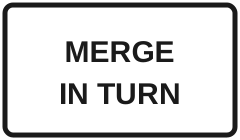
Merge in Turn
White rectangular plate with black MERGE IN TURN text
Where two lanes become one at low speed, such as at road works, vehicles should take it in turns to filter. One from each lane, alternately. This applies only when traffic is moving very slowly, not at normal speeds.
Rule 134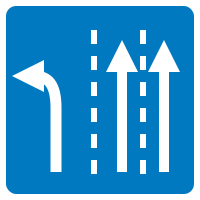
Lane Arrangement at a Junction
Blue sign showing which lane leads where at the junction ahead
Shows how the lanes are arranged at the junction ahead so you can choose the right one early. Get into the lane you need in good time. Do not swerve across at the last moment or straddle the lane markings.
Rule 134