Learners booking an automatic driving test usually ask us two things: is it easier, and why are the pass rates lower? The honest answers are no, it is the same test, and the official figures do not say exactly why. This guide gives you the real DVSA numbers, the rules if you want to use your own car, and the automatic habits that examiners notice on the day.
The direct answer
GOV.UK says it plainly: "The test is the same for both manual and automatic cars." Same route types, same examiners, same marking. In 2025/26 the national automatic pass rate was 44.6%, against 50.0% for all car tests. Passing in an automatic puts code 78 on your licence.
Is the automatic test easier?
No. You still do the eyesight check, two show me tell me questions, general driving, one reversing exercise and independent driving. You drive for about 35 minutes, and independent driving takes 20 to 35 minutes of that. There are 3 reversing exercises (parallel park, park in a bay, or pull up on the right and reverse about two car lengths) and the examiner picks one. You pass with no more than 15 driving faults and no serious or dangerous faults. Our practical driving test guide walks through each part.
What changes is your workload. With no clutch and no gears, you have more attention free for mirrors, hazards and planning. That makes the learning quicker for many people. It does not make the examiner any more forgiving.
Automatic vs manual pass rates: the official figures
DVSA publishes automatic results in table DRT122E, "Automatic car driving test pass rates by gender: test centres", on the GOV.UK page Driving test and theory test data: cars. Its national total for the 2025/26 financial year (April 2025 to March 2026) is 589,483 automatic tests, 263,121 passes, a pass rate of 44.6%.
DVSA does not publish a manual-only national table. Its all-car table, DRT121A, shows 1,998,621 car tests and a 50.0% pass rate for the same year. Take the automatic tests out and manual comes to about 52.3%. That last figure is our own subtraction from the two DVSA tables, not a number DVSA prints.
The gap is narrowing. DRT122E shows the automatic pass rate at 38.8% in 2018/19, 42.7% in 2022/23 and 44.6% in 2025/26.
Why are automatic pass rates lower?
The statistics count results. They do not record why anyone passed or failed, and DVSA gives no reason for the gap. So be wary of anyone who tells you the cause as fact. What the figures do show is that the automatic group is different. In 2025/26, 60% of automatic tests were taken by women (DRT122E), and automatic numbers have grown fast, from 185,043 tests in 2018/19 to 589,483 in 2025/26. A fast-growing group with a different mix of candidates will not produce the same pass rate as the manual group, whatever the gearbox does.
The useful point for you is simpler: a national average is not your chance of passing. Your preparation and your test centre matter far more.
Automatic pass rates at test centres near us
From the same DRT122E table, automatic pass rates in 2025/26 at centres our learners use:
East London
- Goodmayes: 41.5% (11,560 tests)
- Wanstead: 42.1%
- Hornchurch: 43.4%
- Chingford: 38.3%
- Barking (Tanner Street): 33.4%
South East London
- Sidcup: 56.7%
- Bromley: 51.0%
- Erith: 50.4%
- Belvedere: 38.3%
Centre figures move a lot from year to year, so use them as background, not a forecast. Our driving test centres guide covers what each route is like.
How common are automatic tests now?
Very. Using the two DVSA tables above, automatics made up about 29.5% of car tests in 2025/26, close to 3 in every 10. The AA Driving School newsroom, using DVSA data, reported that automatics were 19.19% of tests in 2022/23 and 6.12% in 2012/13. Every fully electric car is automatic too, so more learners will meet two pedals whatever they choose.
Can you take the test in your own car or an electric car?
Yes, if the car meets the rules on GOV.UK: using your own car for the test. GOV.UK treats any car with 2 pedals as automatic, so an electric car counts. Your own car does not need dual controls (a hire car does). It must:
- have an extra interior rear-view mirror for the examiner
- have L plates on the front and back
- be taxed, insured for a driving test, roadworthy, and have a current MOT if it is over 3 years old
- reach at least 62mph and have an mph speedometer
- have a passenger seatbelt and a proper passenger head restraint (slip-on types are not allowed)
- have no warning lights showing, no tyre damage and no space-saver spare fitted
Some models are banned, including the Polestar 4 and Polestar 5, so check the full list. If your car fails the checks, the test is cancelled and you pay again.
Booking basics: the car test costs £62 on weekdays and £75 for evenings, weekends and bank holidays. To change or cancel without losing the fee you need 10 full working days notice. If you do not pass, your new test date must be at least 10 working days away. Book through GOV.UK only.
Automatic tips for test day
- Use creep, do not fight it. At junctions and in slow queues, ease off the footbrake and let the car creep forward. Most automatics need little or no accelerator at that speed, which gives smooth, controlled emergence.
- Hold the car on the footbrake. When you stop briefly, keep firm pressure on the footbrake so the car cannot creep into the stop line or the car ahead.
- Parking brake for longer stops. If you will be stopped for more than a few seconds, apply the parking brake. Rule 114 of the Highway Code suggests this in stationary queues, then taking your foot off the footbrake so your brake lights do not dazzle the driver behind.
- Hill starts. Hold the car on the footbrake or parking brake, check mirrors and your right blind spot, then release and press the accelerator gently. Some cars hold on a hill for a moment; do not rely on it.
- Manoeuvres on creep. Bay parking and parallel parking are easiest at creep speed, covering the footbrake. Keep the car slow and spend your attention on all-round observation.
- Right foot only. Keep your left foot flat on the floor. Left-foot braking risks pressing both pedals at once, and examiners notice it.
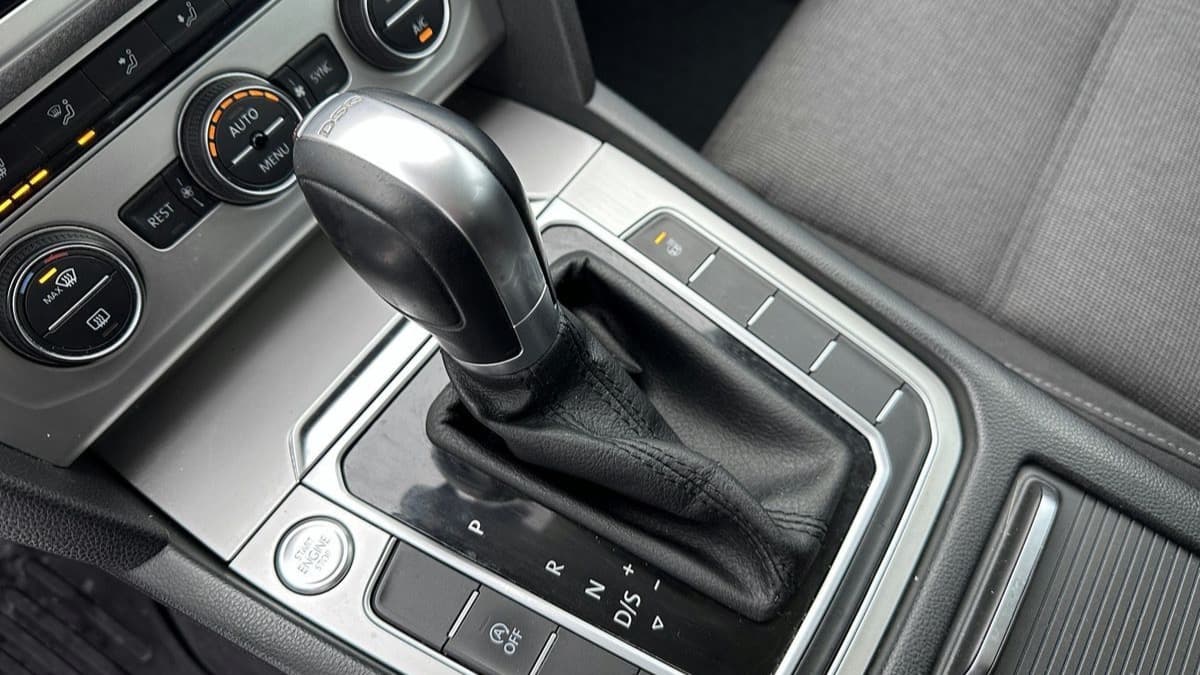
- Select P or N carefully. At the end of a manoeuvre or a pull-up, secure the car before you take your foot off the brake.
What goes on your licence: code 78
Pass in an automatic and code 78 appears against category B. GOV.UK defines it as "restricted to vehicles with automatic transmission". You can drive any automatic, hybrid or electric car, but not a manual. Our guide to code 78 and upgrading to manual explains the single test that removes it.
Getting ready
The automatic test rewards smooth control and good observation, and both come from practice on the real roads around your test centre. Our instructors run mock tests on those routes so the day itself feels familiar. Have a look at how our automatic driving lessons work across East and South East London, or book your lessons and tell us your test date so your instructor can plan around it.