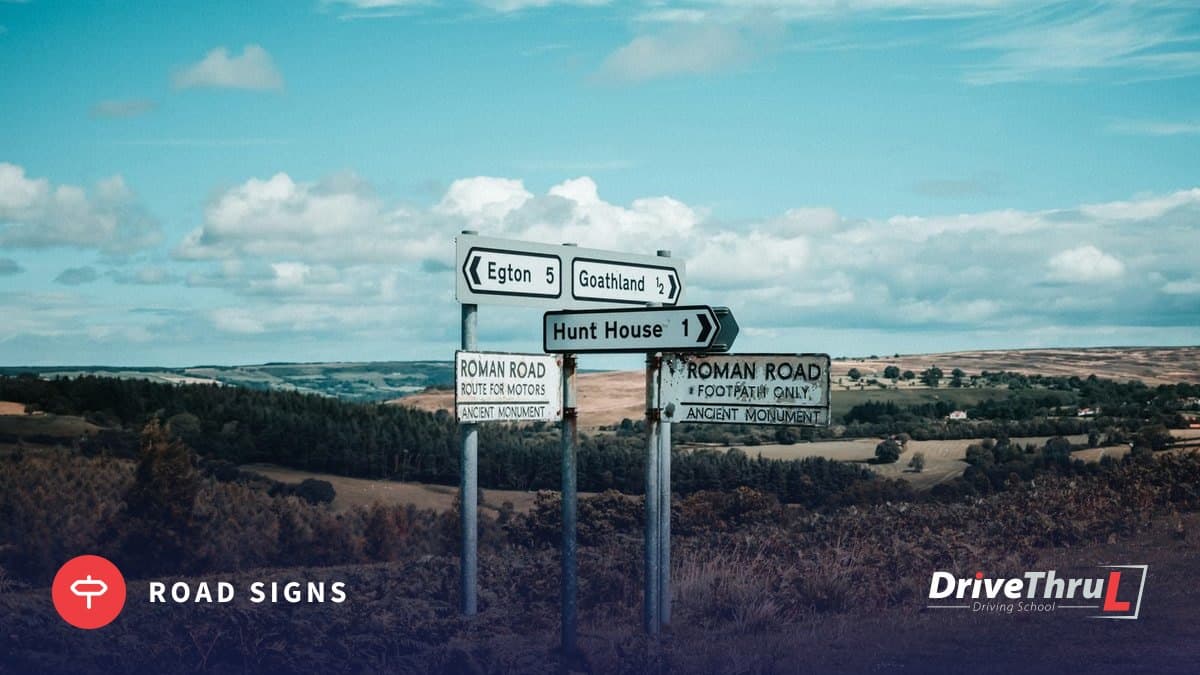
Direction signs are the signs that tell you where roads go. Destinations, distances, route numbers, and junctions. The UK uses a colour-coded system so you can tell at a glance what type of road you are on and what kind of destinations are shown.
🎨 The Colour System
Every direction sign in the UK follows a consistent colour scheme. Here is your visual guide:
Major A-roads connecting towns and cities. The main arteries of the UK road network.
Exclusively for motorway information. Junction numbers, destinations, and exit distances.
Local roads, B-roads, minor A-roads. For shorter, local journeys within areas.
Heritage sites, visitor attractions, and points of interest.
Diversions, road works, and emergency routes. Follow until you rejoin the original route.
🟢 Primary Route Signs (Green)
📍 Where you see them: A-roads that form part of the primary route network, connecting major towns and cities.
Green direction signs show destination names, distances in miles, and route numbers. At junctions, they indicate which lane to use for each destination.
📌 Route Number Boxes:
- Yellow route numbers = roads on the primary network, shown on green signs
- Blue patch with the number in brackets = the road leads to a motorway
🔄 Ring Road Signs
Some green signs include a ring road symbol, directing traffic around a town rather than through its centre. These are useful for through-traffic wanting to avoid congestion.
⚪ Non Primary Route Signs (White)
📍 Where you see them: Local roads, B-roads, minor A-roads, residential areas, and villages.
White direction signs with black text serve the same purpose as green signs but for shorter, local journeys. You will see these on roads connecting to the primary network.
🔵 Motorway Direction Signs (Blue)
🛣 Key Rule: Blue direction signs are used on motorways. Elsewhere, blue rectangles give information, such as parking, and blue circles give orders.
Motorway direction signs show junction numbers, destinations, and the distances to upcoming exits.
🚫 Countdown Markers
💡 Exam Tip: Countdown markers are one of the most commonly tested motorway signs in the theory test. Remember: each bar = 100 yards. Watch for the 1 mile and half mile signs and move into the left-hand lane well before your exit, signal left in good time, and slow down on the slip road, not the main carriageway.
🚧 Diversion Signs (Yellow)
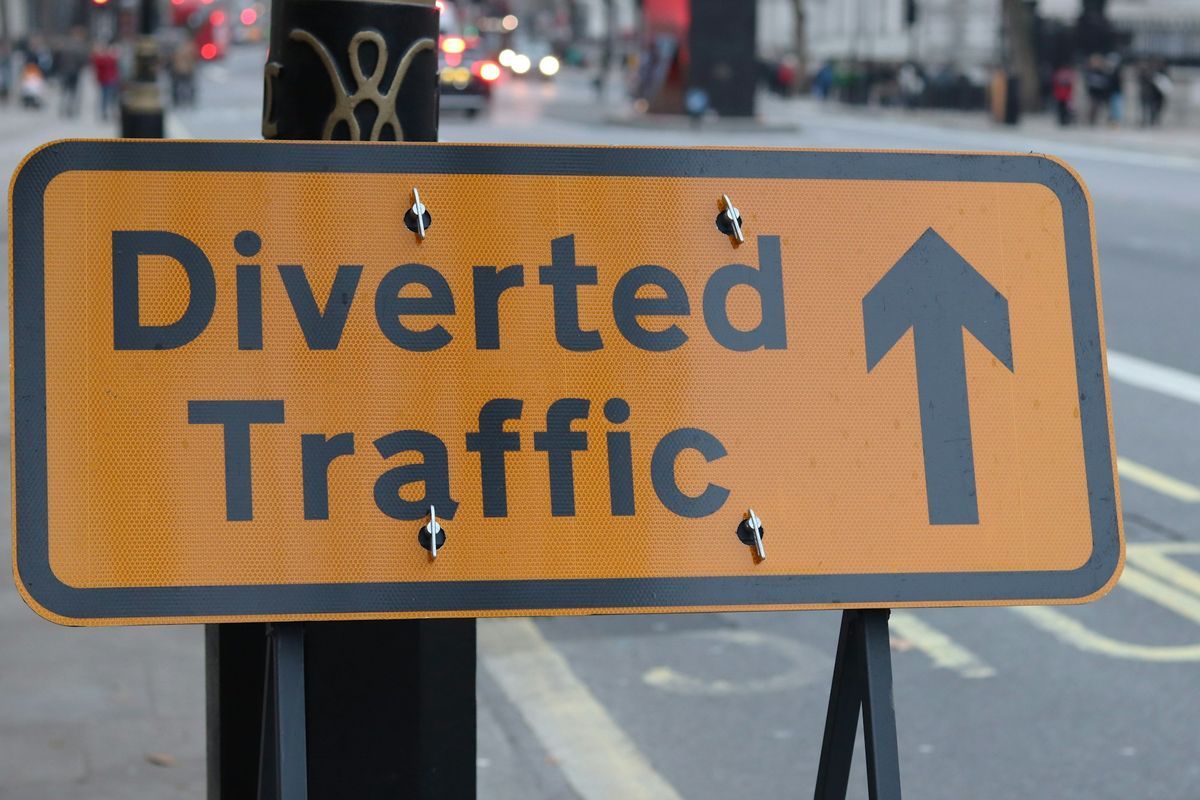
⚠️ Temporary Signs: Yellow signs with black text appear during road closures and works, directing traffic along an alternative route.
Diversion routes are usually marked with a symbol (circle, square, triangle, or diamond) that you follow on subsequent signs until you rejoin the original route.
📚 Direction Signs in the Theory Test
📝 Common Theory Test Questions:
- "What does a green background on a road sign indicate?"
- "What do countdown markers show?"
- "What colour are motorway junction signs?"
- "What is the difference between primary and non primary routes?"
Understanding the colour system means you can answer these questions logically, even if you have not memorised every individual sign.
🚀 Ready to Test Your Knowledge?
See all direction signs in our complete road signs guide or practise with theory test questions.